Celebrating, Commemorating, Centenaries of Suffrage

As the centenary year of women’s suffrage draws to a close, The Centre for the Study of British Politics and Public Life has been examining how and why we celebrate centenaries.
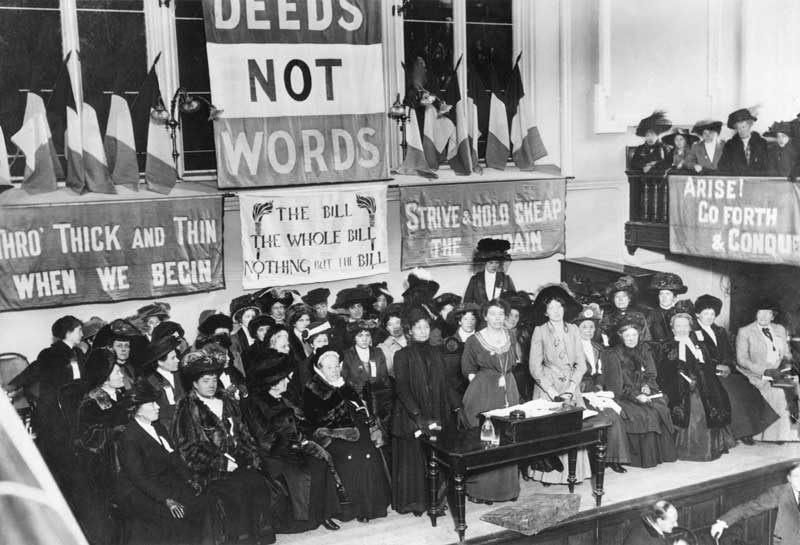
What springs to mind when you hear the words ‘women’s suffrage’? The purple, green and white banners of the Women’s Social and Political Union (WSPU), Emily Wilding Davison losing her life in protest at Epsom Derby, or perhaps the lively rendition of ‘Votes for Women’ given by Mrs Banks in Mary Poppins? All this and more was acknowledged at a fascinating event from The Centre for the Study of British Politics and Public Life at Birkbeck on Tuesday 13 November, as the centenary year of women’s suffrage draws to a close.

Chaired by Professor Sarah Childs of Birkbeck’s Department of Politics, Celebrating, Commemorating, Centenaries of Suffrage aimed to address the centenary of women’s suffrage by exploring how and why we celebrate centenaries.

The first part of the evening saw Dr Mari Takayanagi, a Senior Archivist at the Parliamentary Archives, deliver her paper Celebrating Suffrage Centenaries. She began by explaining how one of the most important anniversaries in the UK’s democratic history is in many respects problematic. As the UK celebrates the centenary of the Representation of the People Act 1918, it’s worth remembering that the Pitcairn Islands in the Pacific have already commemorated their 175 anniversary of women’s suffrage, while the more local Isle of Man has had equal suffrage since 1881. Suffrage has rarely been awarded, at least at first, without being linked to age, race, marital status, class and even relation to men in the armed forces, and British women would wait another ten years for the Equal Franchise Act of 1928 to grant them the same voting rights as men.

Still, this first legislative step towards equal suffrage should be recognised and the impact of this year of national commemoration has been both powerful and wide-ranging. Centenaries act as a catalyst for reflection, prompting greater public awareness and accelerating academic research. During this period, government grants were awarded to projects addressing discrimination and improving female work progression and numerous exhibitions were curated to capitalise on the renewed interest in women’s suffrage. Institutions that boasted some of the biggest collections on this subject, such as the Museum of London and the Manchester People’s Museum, used the opportunity to draw public attention to their permanent exhibits.

Dr Takayanagi argued that centenaries hold a unique emotive power, asking whose memory should be drawn on in their commemoration, and whose memory should be honoured? Unsurprisingly, memorable protagonists of the suffrage movement took centre stage in the celebrations. Emily Wilding Davison alone was remembered through documentary, commemorative services, a play, a plaque, a tree, not to mention #Emilymatters and an appearance at the 2012 Olympic opening ceremony. Indeed, the marking of the centenary of suffrage has in many ways been dominated by the militant side of women’s suffrage, the WSPU. The striking purple, white and green banner now seems synonymous with the entire women’s suffrage movement, leaving the red of the National Union of Women’s Suffrage Societies (NUWSS) and the gold of the Women’s Freedom League to jostle for shelter underneath it.

Undoubtedly, said Dr Takayanagi, the WSPU knew a thing or two about marketing, but could the success of their particular brand of militant feminism ring truer with today’s audience and the swelling anger of the #Metoo campaign than their non-violent counterparts? Thirst for feisty feminist heroines can be quenched more easily with an Emmeline Pankhurst than a Millicent Fawcett. Either way, Dr Takayanagi hopes that the huge public interest roused in 2018 will continue as the ten year countdown to the centenary of universal suffrage begins.

This insightful talk was followed by a roundtable discussion with Mary Branson, Parliament Artist in Residence 2016, and Dr Red Chidgey, lecturer in Gender and Media at Kings College London. The thread running through a broad and lively discussion and Q&A session seemed to be the desire for the uncovering of an inclusive, collective memory of the fight for universal suffrage. Branson discussed how her discovery of a staggeringly wide range of arrested female protestors through the parliamentary archives led her to create an art installation, New Dawn, that would celebrate the ordinary women of the suffrage movement. Dr Chidgey drew on the example of modern feminist movements, such as Sisters Uncut, who sport the colours of the WSPU, to ask if the ‘beloved national feminist memory’ of women’s suffrage could become a tool of protest, rather than its result.

The evening was aptly concluded by Sian Norris, Ben Pimlott Writer in Residence 2018 in the Department of Politics, who read two monologues from the pamphlet  And in the end, we won: Three stories of women’s protest, written as part of her residency at Birkbeck. As her words led us from the mind of a silenced woman of pre-1918 Britain to one who feels she has no voice in the era of the Trump administration, we appeared to need the memory of the suffrage movement more than ever before.

Further information:
Winnie Madikizela-Mandela: A Controversial Life

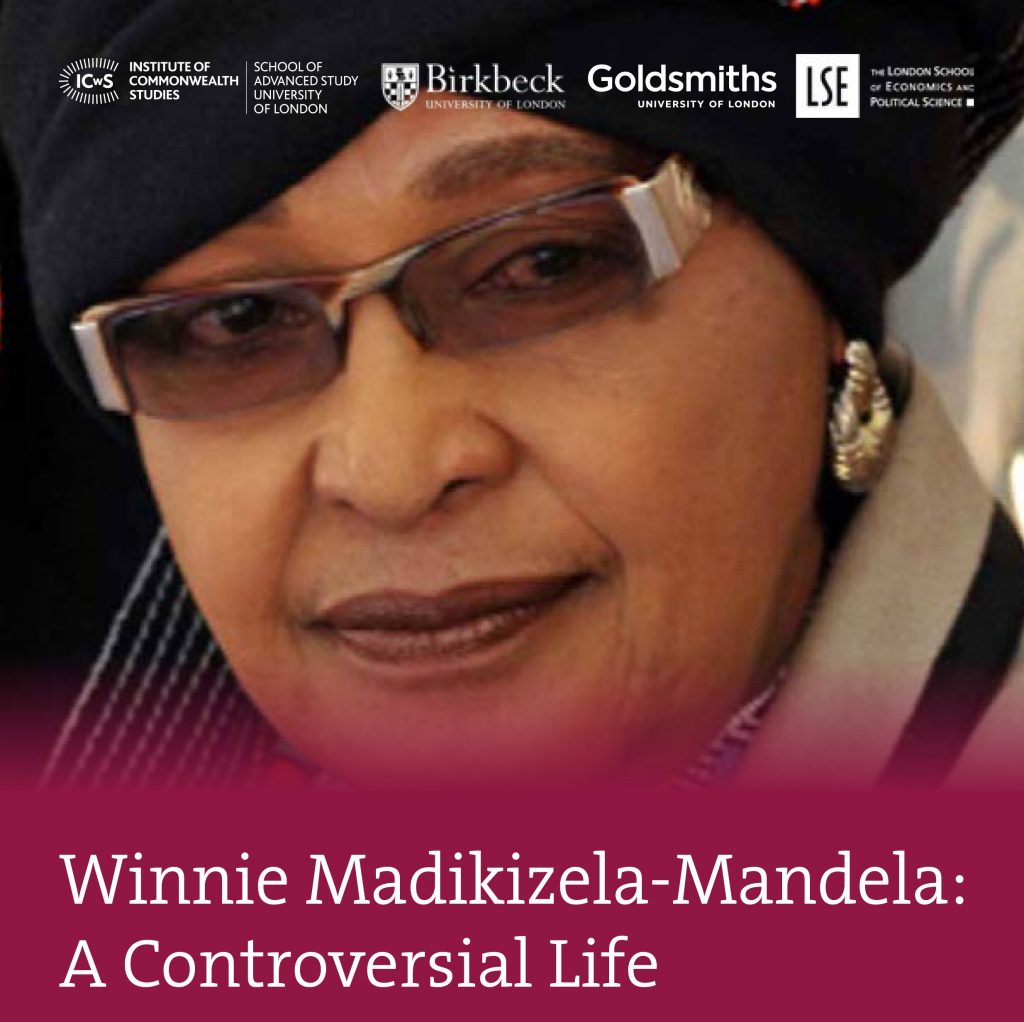
Join an upcoming symposium, exploring the life and legacy of Winnie Mandela through screenings of two documentaries, Winnie (2017) and Winnie Mandela and the Missing Witness (2010), followed by discussions with the directors and further panel discussions. This will take place on Friday 16 November 2018, 9am-4.30pm, at the 43 Gordon Square Cinema. 

In death, as in life, Winnie Madikizela-Mandela continues to excite strong views. Exemplified in the Independent headline, ‘Winnie Mandela: the turbulent life of the woman who went from “Mother of the Nation” to “mugger”’, most narratives of this global icon either fall into the binary trope of good/bad mother, or trace the fall from grace of a respected and courageous comrade. Excoriated by her critics, most significantly, for her association with the Mandela United Football Club’s violent activities in the 1980s, her life and legacy has gained a renewed saliency in South Africa in which her visions of a radical democracy speak anew to a younger generation of activists disillusioned with the fruits of the ‘Mandela miracle’ and with what they see as the compromises of the ANC leadership.  Both the essentially mythical Madikizela-Mandela and the complex and controversial historical figure call for re-examination.

This day’s symposium, held to mark the centenary year of Nelson Mandela’s birth, and the year of the death of Winnie Madikizela-Mandela, seeks to play a role in this reappraisal. Beginning with the screening of two recent documentaries of her life, the Sundance Award-winning film Winnie (2017) and Winnie Mandela and the Missing Witness, (BBC Inside Story series. Episode TRC 99, Part 01, 2010), and discussion between the directors Pascale Lamsche and Nicholas Claxton, and film-scholar Dr Jacqueline Maingard, the days’ events conclude with a round-table and Q and A session with columnists, writers and academics. Columnist and publisher Palesa Morudu, historians Drs Elizabeth Williams, Emily Bridger and Professor Colin Bundy, and writer, Fred Bridgland will form this second panel, chaired by the former BBC correspondent, Martin Plaut. They, together with an audience of academics and the interested public, will reflect on the turbulent and dramatic life of Winnie Madikizela-Mandela looking beyond one-dimensional vilifications and rose-tinted eulogies and immortalisations to consider the historical figure in all her complexity.

An initiative of the University of London Southern African Studies Seminar, and generously funded by BIMI, BISR and the Institute of Commonwealth Studies, it has been convened by Sue Onslow (Institute of Commonwealth Studies), Emma Sandon (Birkbeck) and Hilary Sapire (Birkbeck)

Click here for further information and to register.

Open Access: process, ethics and possibilities

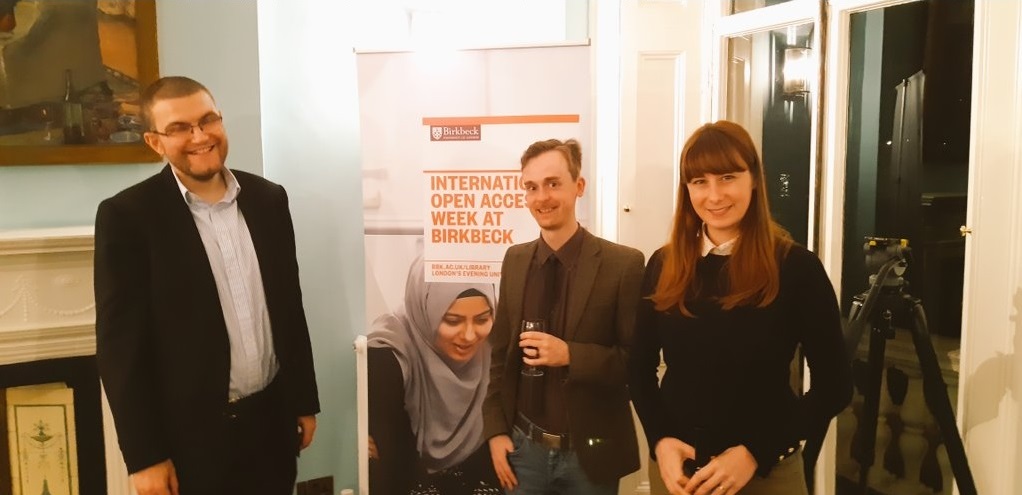
For International Open Access Week 2018, Birkbeck Library held a panel discussion exploring the future and the radical potential of open access publishing. Melissa Steiner, Assistant Librarian, reports on the event.

What would the world look like if access to knowledge was free? This was the question we at the Library asked our students during International Open Access week, 22-28 October. Many responses cited advantages not only to students’ own education but also to the development of knowledge across the world, with the winning answer stating it would ‘unleash people’s potential… Who knows what people could achieve if the barriers to education were removed?’

The theme of International Open Access week this year was Designing Equitable Foundations for Open Knowledge. At Birkbeck, we considered this theme through a panel event held in the Keynes Library entitled Open Access: process, ethics and possibilities. This was chaired by Sarah Lee, Head of Research Strategy Support at Birkbeck and was held the day after the launch of Birkbeck’s new Research Office.

The first speaker was Martin Paul Eve, Professor of Literature, Technology and Publishing here at Birkbeck and member of the UUK Open Access Monographs Working Group. His presentation considered the implications of HEFCE’s proposed mandate that monographs will be required to be made available open access (OA) for the REF in 2020.  Martin laid bare the (high) costs of monograph publishing, and considered funding options for OA publishing in the humanities. He concluded that time was running out for a framework to be built to make this mandate possible, given that the various options available would have repercussions for one or more stakeholders.

The second speaker was Simon Bowie, a library systems worker at SOAS, University of London. He has worked on the implementation and support of open-source systems in HE libraries. Simon’s talk focussed on the radical and disruptive potential of using open source software/infrastructure in libraries. He critiqued the assumption that technology is neutral and proposed an alternative to the hold proprietary software companies have over libraries, urging systems librarians to consider the ethical implications of the software they use and realise the potential that open source offers.

The final speaker was Lucy Lambe, Scholarly Communications Officer at the LSE. Lucy’s talk focused on an initiative at LSE in which researchers were paired with comics creator Karen Rubins, who developed the abstract of their academic articles into comic strips. The success of this initiative demonstrates the power of open licensing (in this case Creative Commons) and open access publishing. The research, which may have been otherwise inaccessible to those outside of the university, was turned into something more easily disseminated to the non-academic public, an important factor when considering how much research is publically funded, and increased the researchers’ impact.

Birkbeck Library was very pleased to be able to bring together a panel with the expertise and thought-provoking insights of our speakers, and it was an excellent opener to the rest of OA week which included sessions on using open access resources, understanding green & gold open access, a DOI for data/ORCID drop in, and of course, the Open Access board game all run by library staff.

Removing barriers to accessing knowledge is an issue close to the heart of library and information workers and we look forward to next years’ International Open Access Week!

A new world to be explored

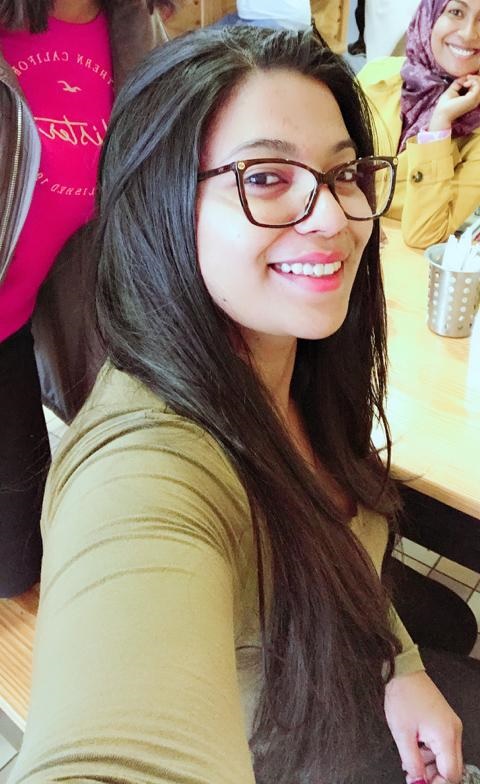
Rukhsana Yeasmin recounts her experiences of studying BA Classics at Birkbeck and the deep love she developed for the subject, which she is now continuing at MA level. She credits her tutors for support and guidance that got her through her degree in difficult times.

The year I decided to study for my undergraduate degree, Birkbeck seemed to be the best option with its strong reputation, its rich facilities in the heart of London and teaching from world-leading experts in the field of Classics. I have never regretted choosing Birkbeck since then.

My journey into the classical world started with my love of philosophy, although I never knew at the time that I was merely looking through the window, with a big new world still waiting to be explored. As I delved deeper into classical literature, it taught me in the most profound – yet accommodating – way that truth is the greatest of all virtues. It is the perfect beauty of truth that provided courage to both Odysseus and Aeneid to undertake the long journey of uncertainty. Similarly, it inspired Plato, Aristotle and Seneca to dedicate their lives in explaining and teaching philosophy. Classical literature teaches us that the search for truth remains sacred to all human existence, and the very thing that makes a hero out of a man.

Although passion will carry one through tough times, achieving good results in a subject requires constancy, dedication and persistent effort every day. While having to care for an elderly parent and going through my own personal crisis in relationships and almost all spheres of life, I found deep solace in classical literature. One of my favourite verses that I learnt in my time at Birkbeck is ‘Dum spiro spero,’ or, ‘as I live I breathe.’

I had regular meetings with my personal tutors, who so kindly and promptly replied to all my emails with guidance and support every time that I reached out to them. In my two year-long modules on Greek history with Dr Christy Constantakopoulou, I was transported to Greece in every lesson, and all ancient writers and warriors came back to life. In the presence of my teacher and dissertation supervisor, Professor Catharine Edwards, everywhere my life glanced I saw possibility. I have had supreme pleasure and the deepest sense of fulfilment while working under her supervision. I am thoroughly indebted to the selfless support and guidance of both my personal tutors Dr Serafina Cuomo and Dr Christopher Farrell for supporting me in completing my undergraduate degree. Moreover, I have never met an undergraduate administration staff member as helpful as David Jones, who was always welcoming and ready to support me whenever I was in need. If it wasn’t for the help and support of them all, I do not think my hard work alone would have got me this far. I remain deeply grateful to Birkbeck and all these members of staff.

I am now studying for my MA in South Asian Area Studies while focusing on the history, philosophy and literature of Ancient India at SOAS. My studies of the classical world at Birkbeck have prepared me to bring new perspectives into my recent studies, and I wish to carry on with further education focused on the historical, cultural and ideological transaction with Graceo Bacterian Kingdoms.

Once one has studied the classical world, one is ultimately placed into the axis of world literature, from where literature of every era becomes relative. The fusion of the past, present and future is so inevitable within classical literature within classical literature that one gets lost and found simultaneously. This is exactly what a classicist experiences, and this is why we study classics.