Birkbeck student overcomes bereavement, anorexia and depression to graduate on her late father’s birthday

At the time when most young people are applying to university, Sarah Solomon was battling an eating disorder and depression as she came to terms with her father’s death. Now she’s looking towards her next challenge with optimism as she graduates with a degree in law from Birkbeck.

Sarah Solomon has always been interested in law, “I’m the kind of person who likes reading the small print!” she laughs. Yet, despite being a keen student, Sarah was prevented from doing as well as she could have at school. “My Dad committed suicide when I was fourteen and I really struggled to cope,” she explains. “I suffered with depression and anorexia and was in and out of hospital for the last four years of school, so I didn’t get great GCSE or A level results.”

Six years later, when Sarah felt ready to return to education, she was dismayed to find that most universities were very inflexible when it came to her exam results, despite the time that had passed since. “Birkbeck looked at more than just grades when they considered my application,” she says, “They take on students that really want to be there.”

Going back to full-time education was a nerve-wracking experience for Sarah at the start: “There was a lot of work and a lot of writing, which was a skill I hadn’t used much for the last few years, but after a few months it just felt normal again,” she explains. In her first year of study, Sarah received support from Birkbeck’s wellbeing service. “I knew that with depression I might find it hard to motivate myself to go in,” she says, “Birkbeck couldn’t solve that problem for me, but they really listened to me and were very supportive.”

It would have been easy to walk away in those first few months, but Sarah persevered and soon began to enjoy studying. “People don’t study at Birkbeck for the sake of it,” she explains, “It’s important to make friends, but you’re also there to gain something for your future. I really enjoyed studying the theory and methodology of law and even started to like writing essays!”

Birkbeck’s evening study model suited Sarah, who prefers working late in the evening, as it gave her the space in the day she needed to focus on her mental health. “It’s important for universities to understand that students and staff have competing demands on their time, and to make provision for that,” she says. Her advice for potential students is to know who can be called on in your support network for when challenges arise. “Have a discussion with your friends and family beforehand,” she advises, “studying in the evening will affect your social life, but for me it was all worth it.”

A highlight of studying at Birkbeck for Sarah was the relationships she built with the lecturers and tutors she worked with. “The professors and lecturers who taught us were really supportive and approachable, but I was also impressed by how up to date they kept with their research – there was always something new to learn from them,” she explains.

Sarah graduates on Tuesday 6 November, on what would have been her dad’s birthday. He also studied law at university, as Sarah explains: “I didn’t choose my course because of my dad, but I suppose it was always in the back of my mind while I was studying. I’m relocating to Canada with my husband next year and I’d like to do more research in law and eventually work as an academic or in a not for profit – I don’t want to place any restrictions on my future.”

Futures for publishing in Art History

Maria Alambritis, PhD candidate in History of Art, discusses a panel examining the current state and future of publishing art historical scholarship – one of a series of events celebrating the 50th anniversary of the Birkbeck’s Department of History of Art.
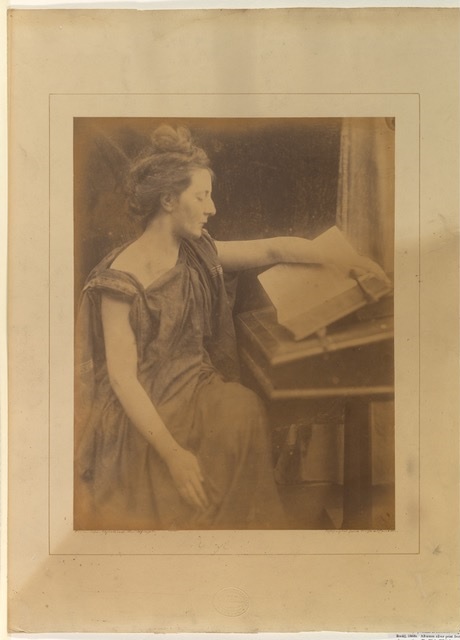
Woman in Robes Reading a Book, 1870, Albumen silver print from glass negative, Metropolitan Museum of Art, New York (69.607.11)

On Friday 19 October, Birkbeck’s History of Art department hosted ‘Forward Looking: Workshops on the Future of Art History’, part of a series of events held this year to mark the 50th anniversary of the department’s founding. The second workshop of the day – ‘Futures for Publishing in Art History’ – examined the state of publishing art historical scholarship as it now stands and addressed current areas of concern and innovation.

Chaired by Dr Leslie Topp, Head of Birkbeck’s History of Art department, the session was structured as a series of ‘in-conversations’ between Leslie and each of the invited participants, who each brought to bear their individual experience and expertise in relation to art historical publication. The panel included Natalie Foster, Senior Publisher for Media and Cultural Studies at Routledge; Baillie Card, Editor at the Paul Mellon Centre; Bernard Horrocks, Intellectual Property Manager at Tate; and Steve Edwards, professor of History and Theory of Photography at Birkbeck and Editorial Board Member at the Oxford Art Journal.

Four key interlocking themes arose across the individual discussions: the ongoing relevance of print publication in the wake of new digital formats; the nature and impact of open access scholarship; the influence of the UK’s Research Excellence Framework (REF) and the complexity of copyright law and issue of image reproduction fees.

Print vs. digital publishing

Natalie Foster illuminated the ways Routledge, which has emerged in recent years as a leading publisher in art historical scholarship, approaches the publication of scholarly monographs, discussing aspects of format, style and topic. Together with an existing focus on areas such as media, film and visual studies, historiography, museology and collecting, Routledge is looking to include design history, photography theory and ‘cutting-edge’ titles in areas such as gender, non-Western art and the Anthropocene. One of the principal areas of uncertainty for both academics and publishers today is the continuing role of print publications in the wake of new digital formats and online open-access models. It was interesting to hear that despite this ‘digital turn’ in publishing, Routledge did not consider print and digital formats as mutually exclusive, acknowledging the on-going relevance of the printed monograph format particularly for academics at the start of their careers.

In her role overseeing the publication of the Paul Mellon Centre’s ground-breaking open access journal British Art Studies, Baillie Card spoke about the differences in approach and challenges encountered in publishing and editing online as opposed to print. The advantages of online publication, especially in offering new possibilities for the kind of scholarship produced and innovative means of presenting research such as utilising video, audio and infographics were demonstrated with examples such as Inga Fraser’s video essay on the work of Paul Nash.

Card described the exciting potential inherent in online presentation as a more ‘curatorial way of arguing’ in contrast to that seen in traditional print journals. Juxtaposing multiple images and offering interpretation in a range of formats, the ‘author-curator’ employs enhanced digital features to enable a greater freedom in the style of argument and inviting simultaneous response, interpretation and discussion.

Open access

However, the exciting potential offered by open access is not without its drawbacks. In the example of British Art Studies, the Paul Mellon Centre has a measure of financial freedom allowing it to take risks and experiment with scholarship in this way. Card cited several ‘open-access ways’ available to others interested in exploring the possibility of setting up their own online journal spaces, such as the Getty’s ‘Quire’– a freely accessible multiformat publishing tool to create lasting, discoverable scholarly publications online.

Steve Edwards acknowledged that open-access has many advantages in terms of widening access to research and presenting scholarship in innovative ways, but pertinently noted that the model nevertheless entails the shuffling of public money to the private sector, an on-going and debilitating part of a wider problem across the public education sector.

REF

The Research Excellence Framework (REF) is a process of assessment which reviews the research outputs of the UK’s publicly-funded research institutions. It judges the quality of the outputs, their impact beyond academia and the environment (facilities and resources) that supports research in each university faculty department.

It was encouraging to hear that despite the REF’s hierarchisation of individually-authored monographs over edited collections, Routledge did not follow suit, acknowledging the importance of such collections for bringing together new voices, particularly from a global angle. Publishing in open access journals such British Art Studies poses concerns for scholars where the framework of the REF or, in a similar case, the American tenure-track system does not currently accommodate such formats as ‘legitimate’ forms of published scholarship. As highlighted by Steve Edwards, rather than a passive monitoring system, the REF is actively shaping the future of art history publishing, as future funding is allocated according to REF score. This has wide-ranging implications, as universities shape their research to target REF requirements, rather than producing research for its own inherent scholarly merit and usefulness to the field. The pressure to produce ‘REF-able’ publications works against the establishment of new, interdisciplinary journals for which the REF’s rigid criteria has no means of assessing, thereby entrenching disciplinary boundaries.

Copyright law, image reproduction fees and ‘fair dealing’

A discussion of online art history publishing cannot avoid the complex issue of image rights. The use of fair dealing and its potential to aid scholars was explored in depth. Baillie affirmed that British Art Studies tries wherever possible to use images under the principle of fair dealing. As detailed here (scroll down for the section on ‘Art History and Fair Dealing’), fair dealing allows the reproduction of copyrighted works without the requirement to pay a fee, so long as the cited work is being used in a ‘fair’, non-commercial way, such as illustrating a passage of criticism or review.

Bernard Horrocks expanded on this discussion looking at the intersection of law, museums, publishing and copyright. The current issue of whether public arts institutions should make images of their collections freely accessible was the subject of lively debate. Tate offers low-resolution images of out-of-copyright works for free, while high-quality images must be paid for. Horrocks stated that Tate makes on average £200,000 a year from image rights fees, acknowledging that while not a huge amount in the overall scheme of the museum’s annual profits it is nonetheless indispensable in today’s increasingly difficult climate arts funding cuts. As raised in the later roundtable discussion, however, it is not clear how much of this sum actually comes from non-commercial scholarly requests.

While the ranks of foreign museums releasing their collection images for free continues to grow – examples include the Rijksmuseum Amsterdam and the Metropolitan Museum of Art in New York – Horrocks argued that these institutions operate on different governance and funding models, the prime example being the charging of entrance fees. However, an interesting alternative UK precedent has been set by Birmingham Museums Trust, which recently made high-quality images of out-of-copyright works in its collection freely accessible.

As with the REF, image copyright itself is shaping research often in very direct ways. Citing the example of his own publications, Edwards has turned to using images freely available from US collections, over examples from UK institutions. Furthermore, the lack of uniformity across UK institutions as to what constitutes a ‘non-commercial’ and ‘scholarly’ publication combined with the fact that liability still rests in the majority of cases with the individual author, rather than the publisher, continues to make image reproduction an increasingly murky and difficult area for scholarship and one that is particularly egregious for art historians.

Following these ‘in-conversations’ a roundtable was held with all the participants and joined by Stacey McGillicuddy, Publisher for Taylor & Francis art journals. It became clear that greater communication between academics and image rights departments would enable a far more efficient and scholarship-friendly means of determining non-commercial use, which as it is currently defined by many picture library departments is out of date and inconsistent with the existing nature of scholarly publication. Finally, in the move towards publishing online, the issue of longevity was raised and the development of digital preservation policies as we move from physical material to digital publications.

The workshop was one of transparent and open debate, which highlighted the advantages that such an interdisciplinary and collaborative debate brings, particularly at a moment of rapid change in art historical publishing.

Both workshops were kindly supported by the Murray Bequest.

Experimenting in the galleries with Vernon Lee

Dr Carolyn Burdett, Senior Lecturer in English and Victorian Studies discusses the life and stories of Vernon Lee, ahead of a ‘scratch’ performance and panel discussion, which will take place at 6pm, Friday 2 November 2018 at Birkbeck’s Keynes Library, to which all are welcome to attend. 

Ghosts haunt her brain, Vernon Lee admitted, publishing a collection of her elegant and mysterious ghost stories in 1890. Violet Paget was born in 1856 and named herself Vernon Lee to inaugurate a career as a writer. But stories were only a part of what appeared from the pen of this woman of quite staggering energy and intellectual range. Lee published studies of art and music, evocative travel writings, essays on gardens, dialogues about art and life, contentious novels, dense essays on aesthetic theories, and polemic interventions on vivisection, feminism and pacifism. She revived the form of the medieval morality play to protest the depredations of war and aggressive nationalism, and she devised her own questionnaires to test theories of art and music. She was an intellectual force of the Victorian fin de siècle, a true cosmopolitan, an outside-the-box queer thinker and, invariably, a very wise woman.

Still in her mid-twenties, and already author of a significant study of eighteenth-century Italy, Lee declared herself a ‘student of aesthetics’. For much of the rest of her life she researched and thought about why we find some things beautiful, how beauty affects us, and ‘what art does with us’. She was captivated by the prospect that the tools and techniques of the emerging discipline of experimental psychology could provide new and definitive answers to age-old questions about art and beauty.

In the 1880s, she met and fell in love with a Scottish artist called Clementina (‘Kit’) Anstruther-Thomson and the two women began to ‘experiment’ together in looking at art. Kit was sensitive to how her body reacted when she looked at objects. Looking attentively, Kit felt her muscles contract and her breath change. The object made her stretch up or sink down; it made her breath shallow and uneven or else deep and filled out on both sides: her body seemed a kind of barometer for the form she viewed.

Lee, avidly reading new research in ‘psycho-physiology’ – how the mind and body are imbricated – began to wonder whether they might have stumbled across the key to beauty. She took her cue from work associated with the psychologist William James who, in a famous essay on ‘What is an Emotion’ (1884), argued that our common sense understanding of, say, the fear we feel on seeing a bear – ‘I see a bear, I feel fear, my body responds to this feeling and I run’ – is in fact the wrong order. What’s really happening is that my body ‘sees’ the bear and responds (muscles tense, hair raises, breath shortens), and the fear I feel is a consequence of these instant, automatic bodily changes. Lee began to investigate the possibility that aesthetic response works on the same model: Kit sees a form, her body responds (her breath changes, her muscles tense or relax, her balance shifts) and these bodily changes make her feel calm or agitated, pleasant or unpleasant. It is the object that precipitates these subtle changes and the feeling accordingly attaches to it, as if it’s a quality of the object. ‘How beautiful’ translates as ‘how good this object has made my body feel’.

The two women experimented together for ten years, in galleries in Florence and Rome, in Paris and London. Their work was part of the pattern of their complicated love affair and, when the love stumbled, the theories and the thinking shifted and changed. But Lee never stopped trying to understand the power of art, why it affects us as it does, and what art can tell us about the mysteries of our minds and our bodies. This event, a collaboration between Dr Carolyn Burdett (English), Professor Rob Swain (Theatre), and Professor Matthew Longo (Psychological Sciences), working with playwright Nicola Baldwin and actors Penny Layden and Anna Tierney, explores Vernon Lee’s experiments in and with love and art and human psychology.

Find out more about the event. 

Well-being for the needs of forced migrants

Birkbeck counsellors, Jo Myddleton and Aura Rico and counselling students Michael Darko and Ishiabah Kasonga write about the collaborative approach they took when tailoring a well-being workshop for the needs of forced migrants, who were starting their academic journey at the College, through the Compass Project.   

The Compass Project has welcomed its second cohort of students to study a university level qualification at Birkbeck, providing 17 fully funded places for those who have sought sanctuary in the UK. The project is unique within the sector, due to its focus on supporting mature forced migrants who may have missed out on accessing education and have faced difficulties in accessing educational opportunities owing to strict entry requirements and a lack of documentation to demonstrate academic ability.

This year, to support students in the start of their journey, the Access and Engagement department organised a two-day orientation, offering a space for students to get to know one another as well as raise awareness of the range of support available at Birkbeck and an introduction to the colleagues behind this.

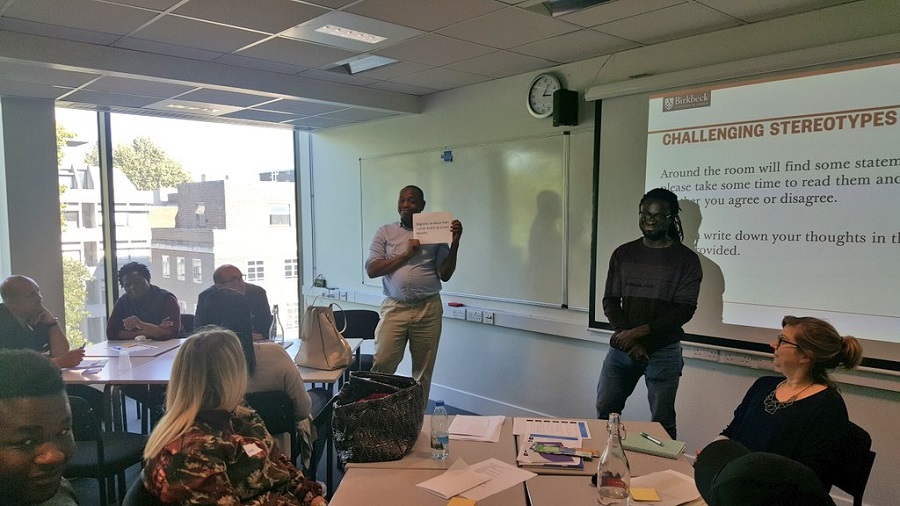
Starting university can be an overwhelming experience for any student and with that in mind, running a session on mental health and well-being was a key topic to explore as part of the orientation. It was also important that we recognised that those from a forced migrant background are likely to present challenges that differ from the average student population. To ensure that the workshop on mental health was meaningful and in line with the needs of the students, the Counselling Service at Birkbeck partnered with two current students studying Counselling and Counselling Skills, and who had started their journey at Birkbeck through the Compass Project in 2017 – to ensure that the experiences and feelings of forced migrants were understood and addressed during the workshop.

On their experience of working collaboratively with Birkbeck students, Aura Rico and Jo Myddleton from the Counselling Service, said:

“When the Counselling Service was invited by the Compass Project to deliver a workshop on Culture Shock and Adjusting to University Life, we very much welcomed the opportunity to meet the new students and support them at the start of their journey through their courses at Birkbeck.

“We have been delivering these workshops for some time so the material was pretty much ready and we just needed to practise a bit and manage our public-speaking nerves. A few weeks before the event, however, Naureen got in touch: two of the current Compass Project students who are studying Counselling and Counselling Skills were keen to be involved in designing and delivering the workshop, to ensure that it particularly took into account the needs of those who have sought asylum.

“Looking back on it, we remember receiving this request with certain ambivalence: We know what we are doing and the workshop is ready to go, we thought. However, we also recognised that Michael and Kasonga would be particularly well-placed to add valuable insight for the benefit of the new intake of Compass Project students.  We got on immediately with Michael and Kasonga: they were full of ideas and very perceptive about the specific challenges that Compass Project Students face. We found the meeting enlightening.

“As a result we re-designed our workshop, opening spaces for discussion and hoping to challenge stereotypes. Michael and Kasonga both spoke eloquently and honestly to the group of their own experiences as students within the Compass Project, which modelled openness to the current intake.  This was then taken up in the group discussions, where experiences, feelings, assumptions and attitudes were shared and explored. It was a very enjoyable experience and thanks to this collaboration we feel we have a better understanding of the needs of our students and are better equipped to support them, and hope that should they need to, they will feel able to engage with the many different sources of support available at Birkbeck.”

Michael also talks about both his and Kasonga’s experience of working closely with the counselling team, both on a personal level and in bettering the support available to those who present with complex and different needs:

“I was in high spirits and full of excitement from passing my first year on the counselling course. Having navigated many ups and downs through my first year back at university. I was pleased to see an email from Naureen asking if any of us would like to be part of this workshop.

“I thought this was an excellent idea, so I jumped on board straight away. The chance of working alongside the counselling team at Birkbeck was very appealing but most importantly I felt that both the Counselling Service at Birkbeck and the College was genuinely interested in the value students could bring.

“I am a strong advocate for bolstering the voices of those who have gained insight and expertise through their experiences, so the decision to include students in this process showed me the level of commitment Birkbeck has to students’ well-being.

“I remember having a meeting with Kasonga and thinking to ourselves, ‘why do they want us to be involved?’ I mean the Counselling Service are the experts in this field and surely, they must have all the answers so why do they need us?

“Our first meeting with Aura proved to us just how much the Counselling Service here at Birkbeck is committed to student well-being. It became very clear that this was not about how good the Counselling Service is, rather, it was a genuine effort to better understand the needs of students and to become better equipped to support them.

“This was all about the students; we both felt valued, which gave us the confidence to open up and talk about our experiences as first-year students on the Compass Project, the challenges we faced and how we overcame those challenges.

“The Counselling Service team were very welcoming of our ideas and insight; the way both Aura and Jo designed the workshop was magnificent in the way that Kasonga and I could bring in our own experience as students within the compass project. Kasonga and I found it very easy and a real privilege to work with Aura and Jo.

“The workshop was structured brilliantly, the group discussions in which experiences, feelings, assumptions and attitudes were shared and explored worked well and I felt that everyone was engaged. The whole experience made me feel that I was in the best learning institution I could ever be and part of something.

“Thanks to this collaboration I feel there is a better understanding of the complex needs of the Compass Project students and the challenges that they face. I am confident that counselling and other available services here at Birkbeck are better equipped to support these students, and I hope that should they need to students will feel able to engage with the many different sources of support available at Birkbeck.

Special thanks to all those working hard behind the scenes to make sure that workshops and programmes such as these come to fruition, from Naureen and team to Aura and Jo, from the Counselling Service to all the donors of the Compass Project.”

The Counselling Services at Birkbeck is committed to improving the wellbeing and mental health of all Birkbeck students. They offer free, confidential, non-judgemental counselling to students – to support with their engagement and experience as a student at Birkbeck.