Category Archives: Humanities and Social Sciences

Documenting refugees in the 21st century

Eva Menger, freelance copywriter and MA Contemporary Literature & Culture student, reports on Birkbeck’s recent Documenting Refugees event, which combined Kate Stanworth’s photography exhibition Where We Are Now with a screening of Orban Wallace’s documentary Another News Story.
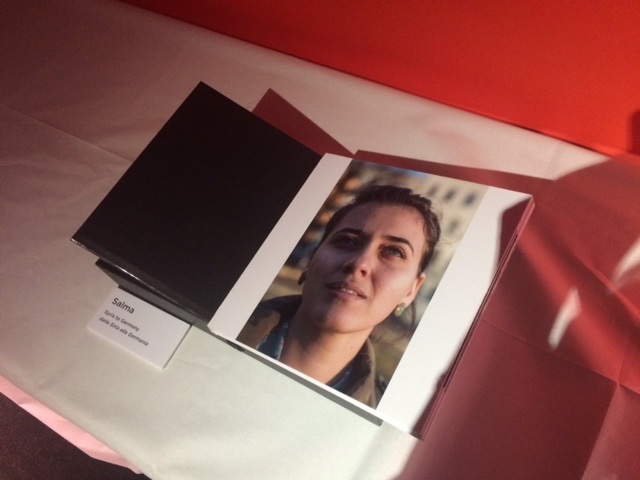
Kate Stanworth’s photo of Salma, who travelled from Syria to Germany.

Wednesday 20 June marked World Refugee Day, an event through which the UN seeks to show governments the importance of collaboration as a means to accommodate forced migrants all over the world. With the global number of refugees being at an all-time high, this year stood for commemorating their strength, courage and perseverance. In light of this message, Birkbeck lecturer Agnes Woolley hosted ‘Documenting Refugees’, a thoughtful evening discussing the way in which refugees are represented both in the arts and media.

The event combined Kate Stanworth’s photography exhibition Where We Are Now with a screening of Orban Wallace’s documentary Another News Story, both of which reveal an intimate portrayal of refugees and their stories. For Stanworth, the focus lies on personal narratives and the psychological survival techniques used by refugees during the most difficult times. In addition, her portraits reveal how reaching the final destination (typically Germany or the UK) is still very much the beginning of the long journey forced immigrants have got ahead of them.

A similar idea is conveyed in Another News Story, where Wallace and his team follow both the refugees and journalists portraying them on their challenging journey across Europe. While the documentary offers an excellent balance of mixed narratives, the character that stands out most is Syrian mother Mahasen Nassif. Not only is her excellent English, positivity and strength while travelling alone completely overwhelming; her story also shows how getting to Germany is not where the refugee experience ends. When, in the panel discussion afterwards, director Wallace is asked about her he admits that she is finding it challenging to be living a slow-moving life in a remote town in Germany, endlessly waiting for documentation. A side of the story we hear a lot less often.

What is also special about the documentary is that it was shot without any kind of plan, with the main characters being simply those they kept running into. Finding a repertoire of narratives was therefore an entirely natural process, Wallace explains. And ultimately this has led to a uniquely nuanced documentation of a phenomenon that is predominantly being told through the biased and sensation seeking media. The documentary title already hints at this, but insights given by Bruno, a Belgian journalist and recurring character in the film, make it all the more evident: the news is wherever the media is – be that refugee camps at the Hungarian border or the Venice film festival.

https://vimeo.com/180955343


‘Another News Story’ teaser

Both during the screening and discussion afterwards, the main issue with documenting refugees seems to be the fact that it is ongoing. As Ahmad al-Rahsid, a forced migration researcher at SOAS who fled from Aleppo in late 2012 comments, the Syrian conflict is considered by critics to be one of the most documented conflicts of humanitarian history, yet it took the picture of one little boy to finally cause a shift in political and public responses. People don’t typically respond to just another news story, and with crises without a beginning or end that is a very big problem. The refugee crisis didn’t start nor end in 2015; it is a long-term humanitarian issue that needs as much attention now as it did three years ago. Events like this are needed to help us realise that.

Arts Week 2018: The Corners

Lynsey Ford, an alumna of Birkbeck, discusses an Arts Week event looking at architecture and pedestrians with photographer Chris Dorley Brown. 

Documentary photographer and filmmaker Chris Dorley-Brown visited Birkbeck Arts Week at The School of Arts on Friday 18 May to discuss his 30-year career as a freelancer. The talk coincided with the release of his new publication entitled The Corners by Hoxton Mini Press, which examines his photography between 2009-2017 across East London street corners, industrial buildings, landscapes and architecture.

Initially trained as a silkscreen printer and print finisher, Chris branched out as a freelancer in 1984. Living and working in the East End for over 20 years, Chris began his media career working as a camera assistant for Red Saunders studio. His comprehensive slide show of his street photography at Birkbeck discussed his initial work building a photographic archive with the London Borough of Hackney.

Chris quickly started to develop his own digital techniques to create narratives; working with multiple exposures taken over an hour, Chris’s images have used around 100 shots taken at different times. These shots have been constructed to resemble one definitive image creating a surreal, dreamlike narrative of the urban landscape. The stillness, composition and colour of all his images adopt the look and feel of an oil painting. Notable shots include a police evacuation where the police sealed off the streets after the discovery of a bomb from World War 2. A boy is seen in disbelief holding an apple near the sealed off area, whilst a faceless young lady, oblivious to potential danger, cannot help but investigate, walking towards the tape. Other images perfectly capture the cynicism of city life, from the street voyeur, a homeless man, who emerges from the hidden corner of a local high street, facing off at an unseen Chris behind the lens. Old pedestrians ‘collide’ with the younger generation of cyclists across the traffic junction emphasising at the inevitable ‘changing face’ of the landscape. Chris also revisited his photography capturing ‘Drivers in the 1980s’. The slideshow perfectly expressed the conflicting emotions of Londoners, from a spaced-out businessman alone in his thoughts inside a red double-decker bus, to the visibly frustrated faces of motorists, caught between shots and the intermittent traffic lights during rush hour.

The talk provided a nostalgic look at London life and Dorley-Brown’s work is a great testimony to a skilled media professional who perfectly captures the history and architecture of the East End.

Further material from Chris’s career can be obtained through the public collections of The Museum of London and The George Eastman Museums.

The 2018 Geography fieldtrip: spectacular landscapes and sun kissed beaches

Dr Sue Brooks discusses the Department of Geography Annual field trip to Mallorca where the group researched the Mediterranean climate, tourism and agriculture.

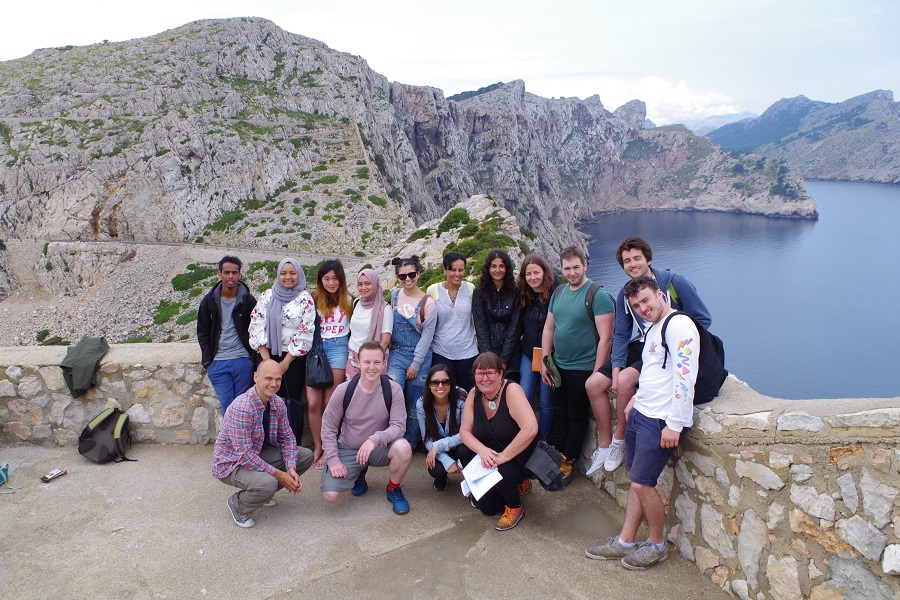
Farewell from the 2018 Mallorca field trip

What is there not to like about the Mallorca field trip? Let’s start with the Mallorcan landscapes, dating back to the Triassic and Jurassic geological periods (@250-150 million years ago) when warm sub-tropical seas allowed the deposition of sediments, shelly fragments and bones, all to be uplifted in the Alpine Orogeny, beginning 65 million years ago and still active today. The result is the landscape of the Trumantura National Park an area of amazing relief, geology and challenging transportation. It contains one of the most hair-raising drives in Europe, accessing Cap de Formentor, but that did not deter our coach driver, who took on the hairpin bends, steep ravines and determined cyclists in a calm and composed manner to get us to the Cap. Next was a trip to the golden sands of Formentor Beach and an ice cream, quickly followed by the wonderful market town of Pollenca, where we were rewarded by the view of Es Pla (central plain) and the rooftops of Pollenca after climbing the Calvery Steps. The final journey took us to the Monastery at Lluc for another ice cream, and then back to Santa Ponsa via the strategically important reservoirs of Gorg Blau and Cubert, constructed in the 1970s to help with water supply across the island.

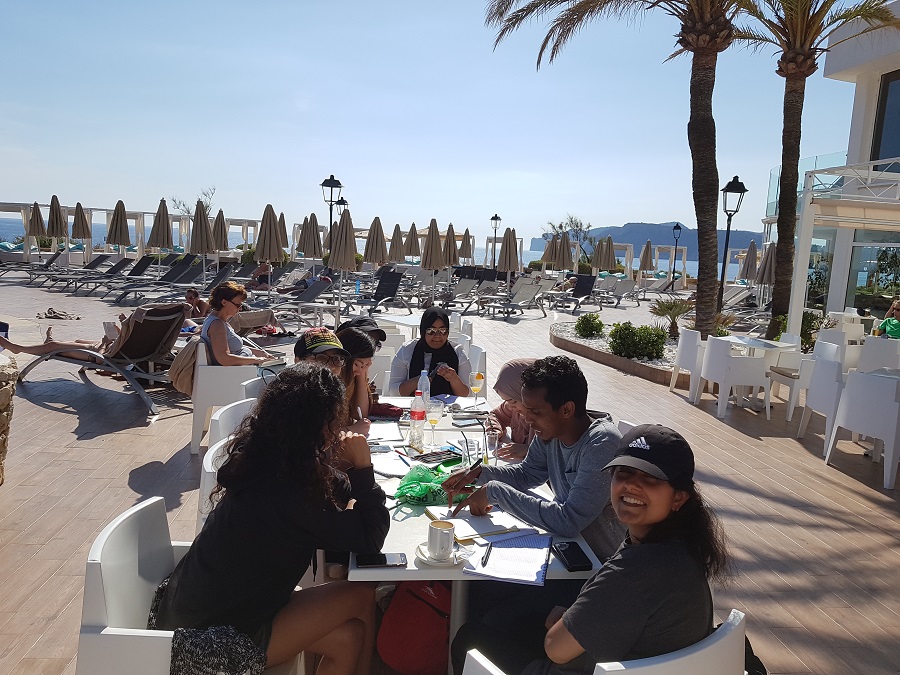
Students were engaged in learning about tourism, agriculture and water supply set within the context of the natural landscapes. One task was producing an isohyet map to show the spatial distribution of rainfall across the island while at the same time discovering that the Mediterranean climate presents some considerable challenges through its temporal distribution of rainfall and the mismatch to tourism demand. There was plenty of time for group work with projects on Santa Ponsa beach and in the ephemeral torrents that are so typical of the island.

Hard work in progress back at the hotel

Project hand in was set for 5pm on the last day and everyone worked very hard to meet this deadline, before a relaxing evening with some travelling to Magaluf to join the fun there. Some students decided to stay on for a holiday and to fully appreciate the diverse and spectacular landscapes of the island. Thank you to all our students for your hard work, dedication and exemplary behaviour on the field-trip. We look forward to welcoming next year’s cohort for another wonderful experience.

Arts Week 2018: Wrestling with Words

Louisa Ackermann, Communications Officer at Birkbeck, reports on Arts Week event Wrestling with Words, a conversation between Toby Litt and Wes Brown which explored writing, fighting and being a man. 

What do we mean when we talk about masculinity? Is it an authentic sense of self, an identity, or is it a performance, carefully crafted and skillfully executed? On Friday 18 May, Toby Litt and Wes Brown joined in conversation to discuss their lives as writers and wrestlers, and how they have questioned what it is to be a man through these dual occupations.

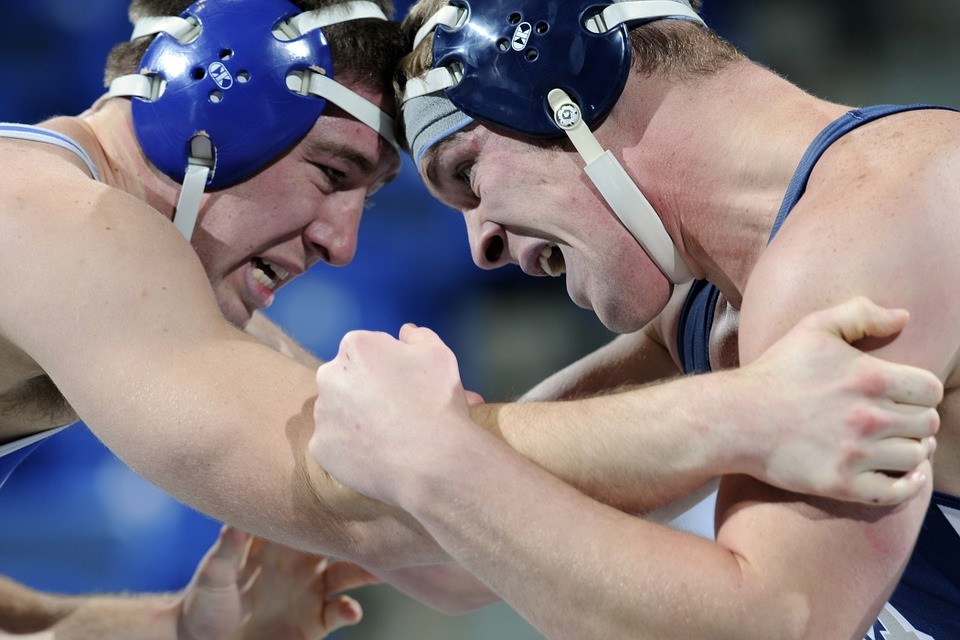
Both have a family background of wrestling: Wes’s father was a pro-wrestler, meaning the scripted type performed in WWE, where characters are outlandish and outcomes are predetermined; while Toby’s great-great-grandfather was William Litt, a Cumberland wrestler who reigned undefeated and took home over 200 prize belts during his nineteenth-century career.

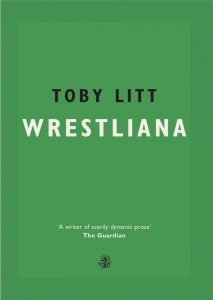
Toby, a Senior Lecturer in Creative Writing at Birkbeck and author of Wrestliana opened the event with a reading from his book, which he was inspired to write in an effort to find out more about his ancestor and the fascinating life he led. William had written his own book, also called Wrestliana, which Toby used during his research process while learning to wrestle himself in a sports hall in Carlisle.

He recounted his thought process and his growing anxieties as he geared up for his first fight:

“All the way up, on the train, I read and reread the practical bits of Wrestliana and thought about how – in five hours, then four hours, then three – I could be riding in an ambulance.

“I knew fairly certainly which injuries I feared most. I’d constructed a sliding scale.

“At the very top, there was quadriplegia – a broken neck and me in a wheelchair, unable to hug my children, scanning websites for advances in robot exoskeletons. Then there was the fractured lower vertebra, keeping me away from my desk, perhaps forever. There was the ruptured knee ligament. In the days before, I had started to notice how many of the men I saw were limping as they walked. I started to walk with an imaginary limp myself, because I thought a knee injury the likeliest. I flashed forward to the serious painkiller addiction that would follow. Next, there was the broken collarbone and the dislocated shoulder. By the time I got this far down the list, I was staring to bargain. ‘Okay,’ I thought, ‘I’d settle for that.’ Badly strained wrist, yes, that would be fine – as long as it was the non-writing hand. Can we make it the left wrist?”

But much to his surprise, he not only emerged without injury but won the match, and was free to continue on his research journey asking questions about competition, success and modern-day masculinity. Indeed, it was clear that for both speakers wrestling had become something which both informed and was informed by their perceptions of their own masculinity. Wes described a struggle to feel sufficiently manly while growing up as a sensitive boy in a working-class community, where many of the men worked in manual jobs, and found that wrestling was a way to assert a type of manhood on his own terms.

Wes followed in his father’s footsteps by going into pro-wrestling, which he describes as a form of drag. “It’s men pretending to be men,” he said, “it’s a performance of masculinity. ‘Being a man’ can be cartoonish and amusing, but it can also be dangerous. There’s a macho hierarchy in wrestling, but it’s all made up…. it’s a way to be macho and be a man, without having to actually be macho and be a man.”

Asked whether his parallel careers of wrestling and writing had informed each other, he said that “both are a form of storytelling, but I don’t think wrestling has taught me anything about writing whatsoever. What it has done is give me something to write about.”

Wrestliana by Toby Litt is available from Galley Beggar Press.