Category Archives: Humanities and Social Sciences

Experimenting in the galleries with Vernon Lee

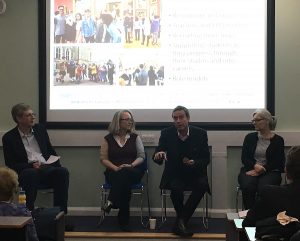
Dr Carolyn Burdett, Senior Lecturer in English and Victorian Studies discusses the life and stories of Vernon Lee, ahead of a ‘scratch’ performance and panel discussion, which will take place at 6pm, Friday 2 November 2018 at Birkbeck’s Keynes Library, to which all are welcome to attend. 

Ghosts haunt her brain, Vernon Lee admitted, publishing a collection of her elegant and mysterious ghost stories in 1890. Violet Paget was born in 1856 and named herself Vernon Lee to inaugurate a career as a writer. But stories were only a part of what appeared from the pen of this woman of quite staggering energy and intellectual range. Lee published studies of art and music, evocative travel writings, essays on gardens, dialogues about art and life, contentious novels, dense essays on aesthetic theories, and polemic interventions on vivisection, feminism and pacifism. She revived the form of the medieval morality play to protest the depredations of war and aggressive nationalism, and she devised her own questionnaires to test theories of art and music. She was an intellectual force of the Victorian fin de siècle, a true cosmopolitan, an outside-the-box queer thinker and, invariably, a very wise woman.

Still in her mid-twenties, and already author of a significant study of eighteenth-century Italy, Lee declared herself a ‘student of aesthetics’. For much of the rest of her life she researched and thought about why we find some things beautiful, how beauty affects us, and ‘what art does with us’. She was captivated by the prospect that the tools and techniques of the emerging discipline of experimental psychology could provide new and definitive answers to age-old questions about art and beauty.

In the 1880s, she met and fell in love with a Scottish artist called Clementina (‘Kit’) Anstruther-Thomson and the two women began to ‘experiment’ together in looking at art. Kit was sensitive to how her body reacted when she looked at objects. Looking attentively, Kit felt her muscles contract and her breath change. The object made her stretch up or sink down; it made her breath shallow and uneven or else deep and filled out on both sides: her body seemed a kind of barometer for the form she viewed.

Lee, avidly reading new research in ‘psycho-physiology’ – how the mind and body are imbricated – began to wonder whether they might have stumbled across the key to beauty. She took her cue from work associated with the psychologist William James who, in a famous essay on ‘What is an Emotion’ (1884), argued that our common sense understanding of, say, the fear we feel on seeing a bear – ‘I see a bear, I feel fear, my body responds to this feeling and I run’ – is in fact the wrong order. What’s really happening is that my body ‘sees’ the bear and responds (muscles tense, hair raises, breath shortens), and the fear I feel is a consequence of these instant, automatic bodily changes. Lee began to investigate the possibility that aesthetic response works on the same model: Kit sees a form, her body responds (her breath changes, her muscles tense or relax, her balance shifts) and these bodily changes make her feel calm or agitated, pleasant or unpleasant. It is the object that precipitates these subtle changes and the feeling accordingly attaches to it, as if it’s a quality of the object. ‘How beautiful’ translates as ‘how good this object has made my body feel’.

The two women experimented together for ten years, in galleries in Florence and Rome, in Paris and London. Their work was part of the pattern of their complicated love affair and, when the love stumbled, the theories and the thinking shifted and changed. But Lee never stopped trying to understand the power of art, why it affects us as it does, and what art can tell us about the mysteries of our minds and our bodies. This event, a collaboration between Dr Carolyn Burdett (English), Professor Rob Swain (Theatre), and Professor Matthew Longo (Psychological Sciences), working with playwright Nicola Baldwin and actors Penny Layden and Anna Tierney, explores Vernon Lee’s experiments in and with love and art and human psychology.
Find out more about the event. 

The future of studying old art

Sarah McBryde, PhD student in History of Art, discusses a recent workshop considering the value of Art History as a discipline and why the study of ‘old’ art will continue to be important into the future.

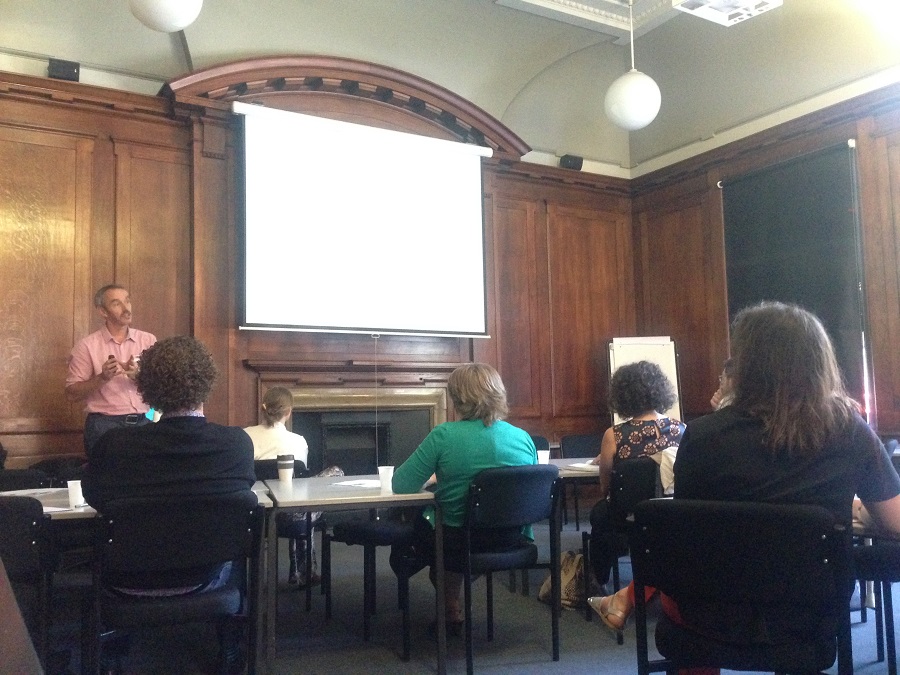
‘The Future of Studying Old Art’ workshop, chaired by Dr Dorigen Caldwell (Senior Lecturer in History of Art, Birkbeck) kicked off another day of events celebrating the 50th anniversary of the History of Art Department at Birkbeck, by considering the current state of the discipline and the ways in which ideas about old art are taught and communicated to a wider audience via digital media and cultural institutions. The various speakers outlined their own experiences and perspectives, creating a lively debate on the reasons why the study and display of ‘old’ art continues to have relevance today.

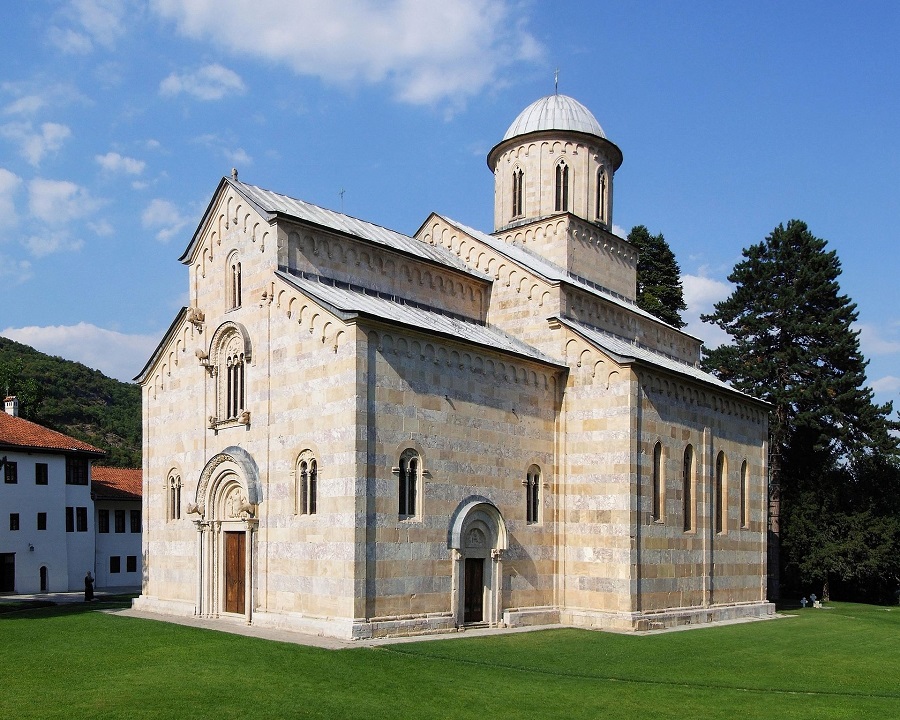
Robert Maniura (Reader in History of Art, Birkbeck) asked why we still study historical objects, both artworks and architecture. Why should we care about something which has survived into the modern era, but was created hundreds of years ago in a society with different values and beliefs from our own? He began by posing some key questions for art historians: What is it? Why is it here? Why does it look like that? And importantly, why is it still here when other things have disappeared?  Maniura argued that in answering these questions art historical analysis can reveal the underlying functions of art in society; be that to impress, inspire, persuade, provoke, control or mislead. He challenged the view in the mass media that art history is somehow ephemeral, frequently framed as a ‘leisure activity’ unless vast sums of money are involved, and questioned why man-made objects should be any less deserving of rigorous study than objects from the natural world undergoing scientific investigation. He also addressed the shifting cultural meanings of artworks through history, citing as an example the Medieval Dečani Monastery located in modern day Kosovo. Prior to the 1990s conflict, this Orthodox Christian church was venerated across different local faiths, but now finds itself a symbol of Serbian nationalism in the Kosovo region, surrounded by armed guards and tank traps still under the control of NATO KFOR peacekeepers.

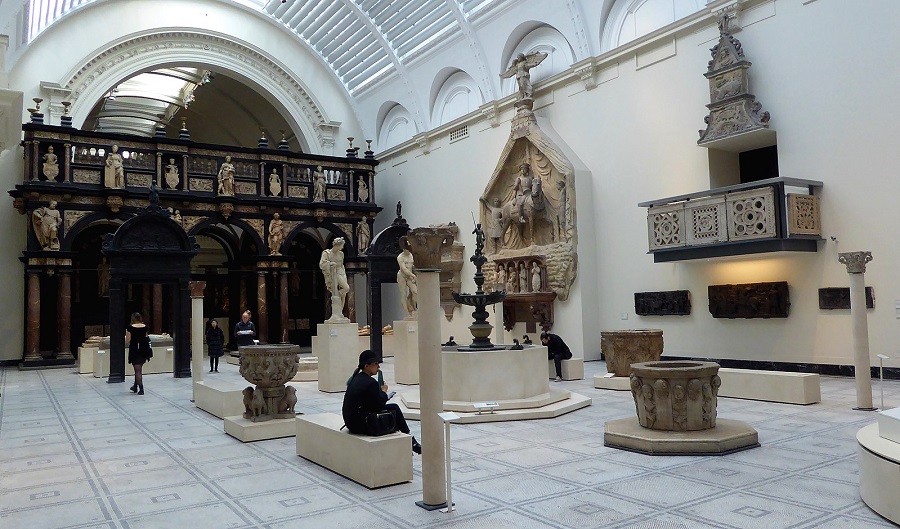
As Chief Curator of the V&A’s Medieval and Renaissance collections, Peta Motture discussed how the galleries were redesigned to incorporate new approaches to the display of objects and the views of museum visitors. The stated aims of the project were to ‘inspire, engage, preserve, connect and transform’ by reformatting the way objects were displayed to provide informative contexts for their production and use, while still maintaining a chronological sequence to the rooms, which the public preferred. Defying some criticisms that particular iconic items would lose their status when embedded in a wider context, the redesign has been highly successful since it opened to the public in 2009. Motture noted that art historical research formed a vital part of the project, which along with gallery design, enabled displays to reflect the historical reality of individual objects and bring them to life. For example, cassoni marriage chests are displayed at shoulder height, as they would have been seen carried in Renaissance bridal processions, and costumes are displayed on mannequins without plinths, so the viewer is directly confronted ‘face-to-face’ with a figure from the past.  She also commented on the continuing commitment of the V&A to engage new audiences, finding ways to display contentious objects, such as those with colonial origins, in contexts which reflect our modern and diverse culture and continue to give relevance to old art for future generations.

Peter Maniura (Head of Digital Development, BBC Arts) reflected on visual images as vehicles for storytelling, vital to broadcasters like the BBC. He discussed the recent reboot of Kenneth Clark’s Civilisation (1969), reformatted as Civilisations (2018) with Simon Schama, Mary Beard and David Olusoga. Maniura observed that the new series demonstrated the changing attitudes towards art history. Whereas Clark’s version conformed to rigid parameters of what belonged inside and outside the (western) ‘canon of great art’, the new BBC series brought together the distinct perspectives of three separate academic presenters and encompassed a diverse range of source material previously excluded, to both represent and engage a modern, multicultural audience. He also discussed the associated Civilisations Festival, launched by the BBC in tandem with the series to connect local communities with their museums via 280 free public events. He outlined BBC Digital’s continuing projects to develop technology to bring the arts to a wider audience, such as the release of an augmented reality app through which users can manipulate 3D images of museum objects to access information, and #OperaPassionDay, which made live streamed performances and events from opera houses across the UK available via an interactive website. Maniura made the important point that shaping the future for old art is an urgent task to ensure that in a blizzard of visual information, the next generation will choose to engage with our respected cultural institutions.

This concern was addressed by the final speaker, Rose Aidin, whose project Art History Link-up, provides ample proof of the appetite of young people for Art History. The charitable organisation, set up in 2016/17, offers a fast-track AS Level/ Extended Project Qualification in History of Art to students aged 16-18 from state schools where Art History is not available on the curriculum. This qualification is free and requires the student to attend Saturday courses held in various partner organisations including the Wallace Collection, National Gallery and Courtauld Institute. Advertised via social media, Aidin noted that the uptake has been phenomenal, to the extent that they do not currently have enough places to support all the applicants. This fantastic programme engages a wide range of students who would otherwise have little or no access to art history education, and takes young people into museums and galleries to experience art directly. She commented on the hugely positive feedback she has had from former students about the impact of the course in developing a wide range of skills, from visual analysis to critical thinking, while also providing an accredited qualification towards their future university applications. As well as benefiting the students, Aidin noted that the courses provide valuable teaching experience for art history graduates further down the line. Currently, the project is London-based, but one might hope that our national cultural institutions may support similar regional initiatives in future.

The workshop provided a highly positive view of the future for studying old art. It illustrated the continuing importance of Art History, as well as demonstrating the variety of ways in which the discipline is developing to welcome new and diverse audiences to all aspects of visual culture. As all the speakers demonstrated, in these times of fake news and social media manipulation, the role of Arts and Humanities is ever more important as a gateway to understanding the world around us and also to provoke us to think about and question the ‘facts’ we are presented with.

Open House London: architectural history for the people

Adam Coleman, MA History of Art student, joined the Birkbeck team to give his first tour as part of Open House London, the initiative that first sparked his interest in architectural history.

I’ve always been a fan of Open House London since moving here back in 2002; on reflection, I think that my interest in architectural history (and in particular post-war social housing) is probably attributable back to some of my early tours of estates like Camden Council’s Alexandra Road. The event has always struck me as a great entry point for the general public into architectural history, so it felt the right platform (and the right time) to ‘switch sides’ as it were and be the person giving the tour, rather than the one going on it. On Saturday I was pleased to join the Birkbeck team (steered by the incredible Eva) to contribute to the programme of tours at Gordon Square. The tour I led tour focused on Birkbeck’s RIBA award-winning cinema, completed by Surface Architects in 2006. I followed this on Sunday by co-leading tours of Tottenham’s Ferry Lane Estate, a low-rise housing estate of 750 homes completed by the Greater London Council (GLC) in the 1970s.

The opportunity to co-lead tours of the estate came about somewhat serendipitously as a result of research undertaken for Birkbeck’s Graduate Certificate in History of Art, which I completed in last academic year. As a result of my research, I had already been in contact with the estate’s active Resident Association and when I suggested that they enter Open House to mark the 40th anniversary of the estate’s opening they were enthusiastic. Without the buy-in of the Residents Association a tour would not have been possible – or indeed appropriate – and the collaboration meant that the tour could combine my architectural research with resident insight into estate’s dramatic lived history (which saw various tussles with the GLC and a high-profile case of squatters occupying an empty block).

The estate had always fascinated me since moving to Tottenham five years ago, and the research I undertook only deepened my interest; leading to more questions rather than solid answers about its built form. It was built during a period of great change in British history which witnessed a Conservative Government’s forced dismantling of the British Welfare State combined with a growing public dissatisfaction with modernist architecture, typified by the high-rise point-blocks of the late 1960s. The estate combines two contrasting housing typologies (medium-rise flat blocks and low-rise terrace/street housing) built in a consistent neo-vernacular material vocabulary comprising red brick and slate-hung upper levels. The plan of the estate is informal: private, semi-private, and public spaces combine in an irregular manner with strong natural landscaping throughout. My particular line of enquiry concerned the way in which its built form reflects this period of British history, and the extent to which it can be understood as a progressive example of estate planning which combines modernist ideas with emerging postmodern thinking.

Social housing (or lack of) is a very ‘live’ issue in Tottenham, as elsewhere in London. Local residents are currently joining forces to campaign against a controversial planning application which would see a commercial developer build over 1,000 flats in 13 tall towers, with not a single home at genuinely affordable or Council rent being proposed. It certainly felt like an apt moment to acknowledge the vision and ambition of GLC’s Ferry Lane Estate.