Category Archives: Business and Law

“Birkbeck opened the door to my new life”

Catherine Bourne’s life was changed when she witnessed the exploitation of human rights in Georgia. It led her to study MA Human Rights 33 years later and embark on a career change. This is her story. 
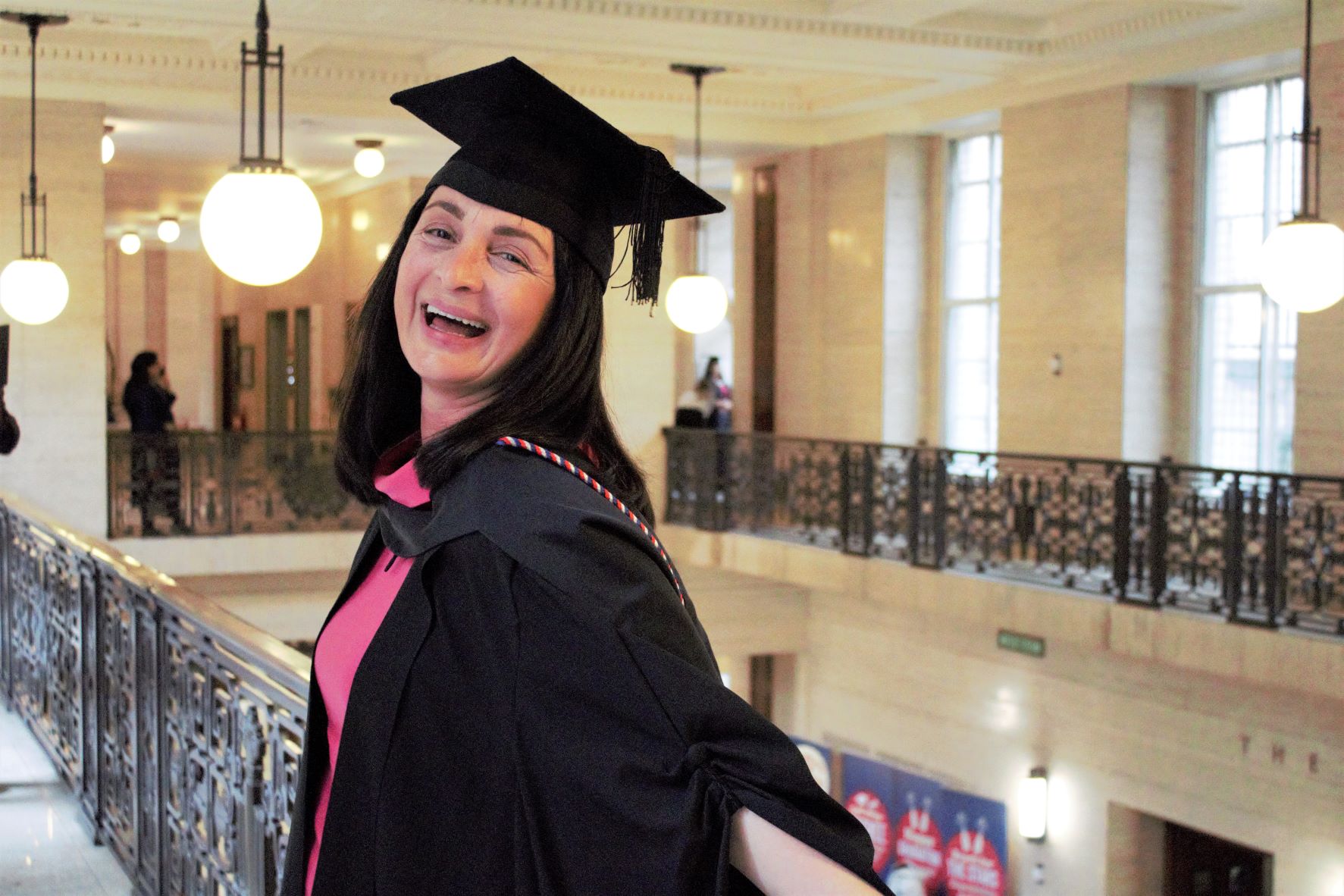
Catherine Bourne

The moment that changed my life 

It was 1989 and I was 18 years old, studying Foreign Languages at university and living in the city of Tbilisi, Georgia. I was participating in a peaceful demonstration for independence, but we were met with violent retaliations by the Soviet Army which left 21 people dead, mainly young women aged 16 and 18. Witnessing these events unfold in front of my eyes was when I first questioned the understanding and laws of human rights.   

10 years later, I moved to London to start a new life  

I give birth to a girl and a boy and then in 2005, I accepted a job in my son’s school, working with autistic children and supporting them. It felt so rewarding to be able to help them.  

In 2012, I filed for a divorce because of domestic violence 

This personal experience ignited something inside of me and it was a similar feeling I had back in 1989 at the demonstration: I felt I needed to do something and be an advocate for the rights of women and children. In 2019 I decided to take the leap and I was accepted to study MA Human Rights at Birkbeck. 

I was so scared to start studying again after 20 years 

My children were my biggest supporters and they encouraged me to persevere, even though I was frightened I wouldn’t be able to do it. I even ran away from the Library on my first day. 

The course was everything I could have hoped for 

I found the lectures so stimulating and especially enjoyed the module on the future globalization of human rights. I was pleased to make friends on the course who I still keep in touch with now. My application to the Birkbeck Hardship Fund also meant I was given a personal laptop which I’m so grateful for. 

Volunteering with Afghan mums  

I’m building up my confidence to work in the field of human rights, by volunteering every week with Afghan mums and assisting them with questions about living in the UK and teaching them English.  

I’m so excited for the future and embarking on a new career in human rights. I was uncertain about doing a degree aged 49 but Birkbeck offers the chance for everyone to study and change their lives, regardless of age, background or circumstance. For others who are my age and wondering if it is the right thing to do, I’d say go for it!  

Researching gender inclusivity in Shared Mobility as a Service

Dr Maurizio Catulli, Senior Lecturer at the University of Hertfordshire shared insights into women’s use and perceptions of Shared Mobility as a Service in our latest Responsible Business Centre seminar.

On Friday 25 March, Birkbeck’s Responsible Business Centre was delighted to welcome Dr Maurizio Catulli, Senior Lecturer at the University of Hertfordshire to present research into gender inclusivity in shared mobility. Maurizio’s presentation shared results from a preliminary study which has been awarded a British Academy Grant.

The seminar was chaired by Dr Ioanna Boulouta, Director of Birkbeck’s Responsible Business Centre.

What is Mobility as a Service?

Personal mobility is essential for the functioning of society, whether for commuting to work, visiting family and friends, or transporting goods and services. Often, these activities are combined in a chain of trips.

Currently, personal mobility relies heavily on private cars. According to the Department for Transport, 83% of total passenger distance travelled in the UK is done by car.

Maurizio highlighted that cars are efficient in terms of journey time and enable users to be more spontaneous. Ownership of private cars is also associated with safety and a sense of belonging. However, cars are also the mode of transport with the greatest impact on the environment, accounting for a fifth of all UK emissions.

Various solutions have been proposed to minimise dependency on cars, such as greater use of public transport or shared cars, bicycles and scooters. Mobility as a Service (MaaS) looks to make shared mobility options more appealing to users by providing a one-stop platform to book multiple forms of transport in one place, including shared vehicles, and to see journeys with multiple steps as a coherent whole.

Maurizio commented that the diffusion of MaaS has not been very successful, but it has the potential to reduce the environmental impact of personal mobility. MaaS delivers environmental benefits by encouraging walking and cycling and reducing single occupancy of vehicles.

Mobility as a Service and Inclusivity

Maurizio reflected that women are at a disadvantage compared to men in terms of mobility as they have less access to private cars and fewer women hold a driving license. Research shows that women are more likely to embrace sustainable consumption than men, so they could be enthusiastic users of MaaS. However, Maas – like other forms of shared mobility – worsens gender injustice due to safety concerns for women. According to research by Gekoski et al. (2017), 15% of women report sexual harassment by men when using shared transport.

Bearing a disproportionate amount of childcare and household responsibilities, women are also at a disadvantage in using shared mobility as they need to carry infants with prams and car seats or carry shopping. Women tend to cycle and use buses more than men, but are less likely to car share or use e-scooters.

The research so far

Drawing on transport practice theory and consumer culture theory, Maurizio’s research addresses three key questions:

  1. How can shared mobility through offerings such as Mobility as a Service fit into women’s personal transport practices?
  2. What factors shape women’s choice for its adoption?
  3. How can shared mobility offerings such as Mobility as a Service be made safer and more inclusive of women?

The preliminary study was based on nineteen qualitative interviews with a mix of providers, academic experts and users.

Policymakers interviewed commented that the problem of safety, privacy and general awkwardness of sharing vehicles does not affect women alone. This group was not specifically concerned about women’s safety, but highlighted COVID-19 as a risk.

In contrast, female participants shared concerns about sharing vehicles with unknown people and receiving unwanted attention from men. The shifts between mobility modes, for example getting out of a car and onto a bicycle, were perceived as vulnerable moments, especially when services such as buses or trains are delayed. Participants were also wary of autonomous vehicles and the possibility of encountering an unknown person inside.

A possible solution would be to allow background checks on users of MaaS apps and to allow tracking so friends could check in on each other when traveling home. MaaS could also inform users about the safety of different areas, as Google Maps does by offering a safer route home.

Maurizio noted that a sense of community can support users to feel safe. For example, sharing vehicles within a smaller area, or between apartments within a building, fosters trust. Maurizio is open to collaborators and prospective PhD students who would like to explore this research further.

Further information

Thriving at different stages of an academic career

Professor Morten Huse discussed making an impact at different stages in the scholarly life cycle in his second talk for Birkbeck’s School of Business, Economics and Informatics.

On Tuesday 15 March, Birkbeck’s School of Business, Economics and Informatics was delighted to welcome back Professor Morten Huse for the second talk in a series discussing ‘How to become and thrive as an impactful scholar.’

The series, organised and chaired by Dr Muthu De Silva, Assistant Dean (Research), aims to develop Birkbeck’s scholarly community and to support academic colleagues in their research endeavours. The second talk, ‘Thriving at different stages of an academic career’ draws on insights from chapter 9 of Morten’s book ‘Resolving the crisis in research by changing the game’.

Morten encouraged attendees to consider their academic career as a life cycle, reflecting on his own experience of being affiliated with many different universities and the lessons learned along the way. He reflected on some key philosophies that have guided his academic career:

  • ‘Ritorno al passato’ – the need to reconsider the modern approach to scholarship.
  • ‘From POP (publish or perish) culture to a sharing philosophy’.
  • ‘Life is too short to drink bad wine’ – we don’t have unlimited time, so it is important to prioritise what matters most.

What is true scholarship?

Morten commented: “It is easy to think that we are measuring scholarship by publications,” arguing that, as early as the 1990s, academics were already feeling pressurised to publish in certain journals. This has resulted in ‘hammer and lamp syndrome’, where scholars address problems that are already under the lamp, i.e., where data is already available, instead of seeking out difficult problems, as this is an easier route to getting published. Similarly, Morten explained: “If you have a hammer, you see the world as a nail and will look for the easiest way to getting published.”

Reflecting on Boyer (1996), Morten argued that scholarship is not what scholars do, but who they are. When aiming for excellence in research, the goal should reach beyond getting published to thinking about the impact research is having. According to the European Research Council, excellence in research involves:

  • Proposing and conducting groundbreaking and frontier research
  • Creative and independent thinking
  • Achievements beyond the state of the art
  • Innovation potential
  • Sound leadership in training and advancing young scientists
  • Second and third order impact.

Defining your scholarly ambition

Morten noted that academic careers can look different for everyone and that scholarly ambitions are personal and will vary. Career paths can take a teaching, administrative or research route and reach could vary from local, national, to global.

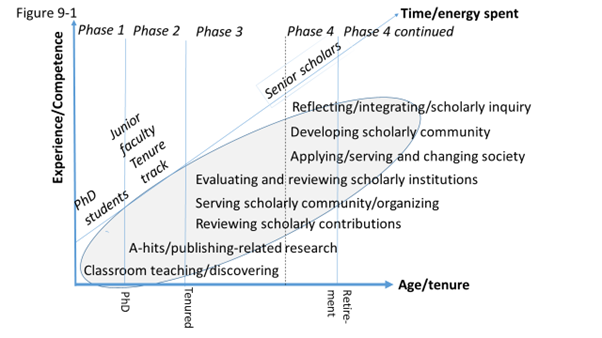
Morten reflected: “It’s easy not to do the proper reflections, integrations and scholarly enquiry. It’s easy not to make a contribution to developing the scholarly community. It’s easy not to give priority to doing something for society. In reality, the scholarly life cycle is not just about getting published; there is so much more that is needed.”

He shared an image of what the scholarly life cycle could look like, enabling senior scholars to give back to junior colleagues:

Graph showing the different stages of an academic career.

We would like to thank Professor Huse for a thought-provoking presentation and discussion. The next event in this series will take place in May, where we hope to have the opportunity to bring our community together in person. Details to follow soon on the Department of Management events page.

Further Information

BEI Welcomes International University of Catalonia to Experience Birkbeck Life

Will Richards from BEI’s international team reflects on a recent visit from delegates of the International University of Catalonia – complete with cream tea and Friday fish and chips!

On the week of 1 March, Birkbeck’s School of Business, Economics and Informatics was delighted to host a visiting delegation of prospective partnership students from Spain.

Birkbeck’s close relationship with the International University of Catalonia (UIC) brought six visiting students to the heart of Bloomsbury, with Andrea Williams and Will Richards from BEI’s international team on hand to greet them. Joining them was Nicoletta Occhiocupo and Marta Segura Vacarisas, of the university’s faculty.

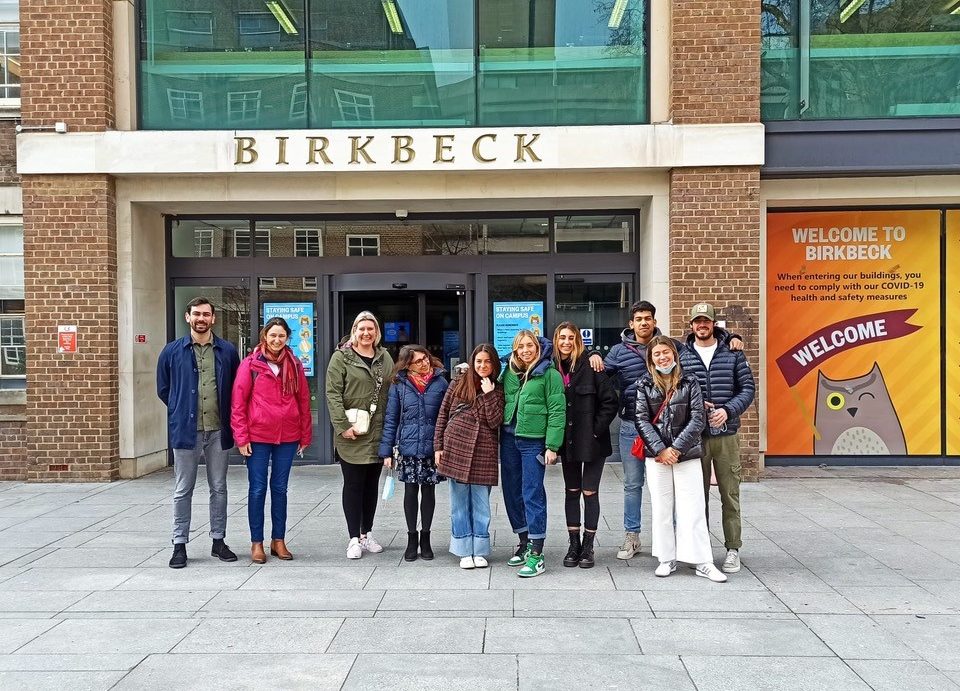
Visitors attended sample lectures on Financial Economics by Dr Ken Hori and Marketing by Dr Nick Pronger and were given a campus tour. Although an emphasis was placed on the academic opportunities at Birkbeck, there was an opportunity for students to enjoy some classic Friday fish and chips and even a cream tea at the British Museum!UIC delegates enjoying afternoon tea at the British Museum.Birkbeck’s partnership with the International University of Catalonia allows UIC students to achieve a dual-degree, with an academic year spent in London.

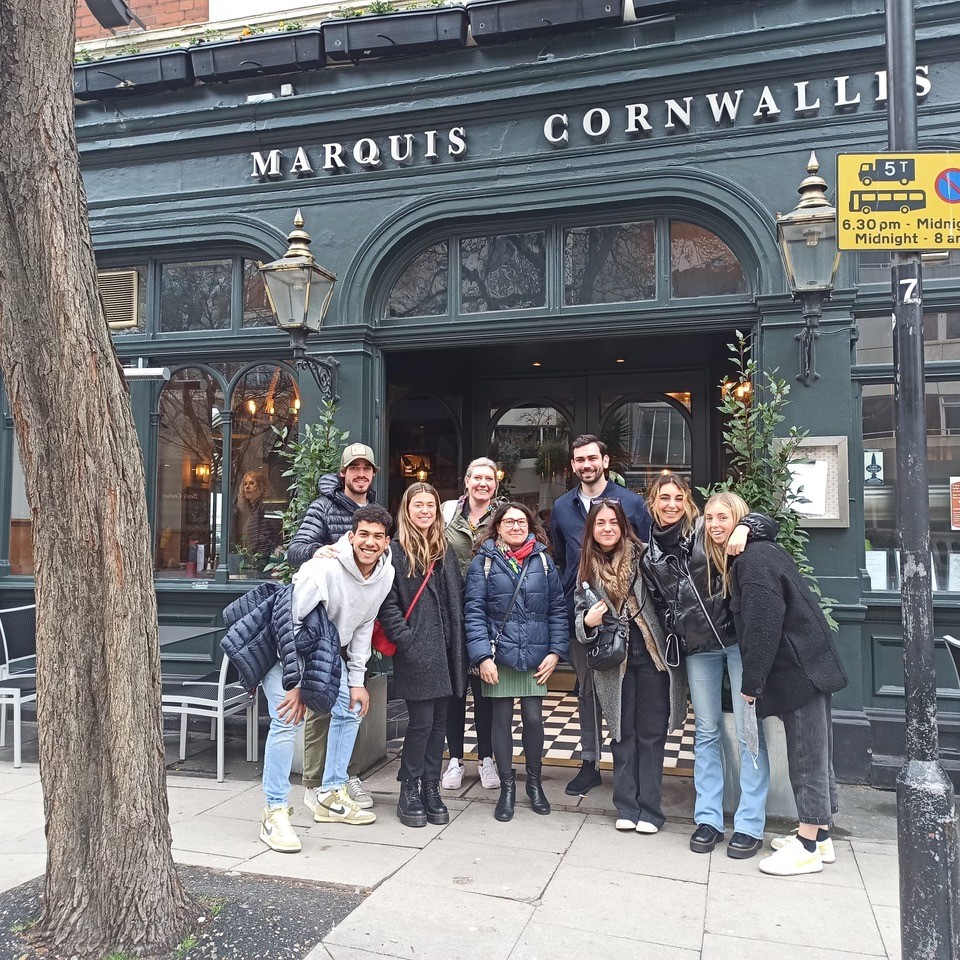
This experience allows our partnership students to experience British culture in our great city, whilst also allowing them to achieve a prestigious University of London degree.UIC delegates standing outside the Marquis Cornwallis pub.In October 2022, we look forward to welcoming our second – and largest-ever – cohort of UIC partnership students. With Birkbeck’s ever-expanding international student community, we look forward to developing our special partnerships.

Further Information