Author Archives: R Bonaparte

“Birkbeck’s policy of not requiring specific grades and instead assessing my ability meant I had the chance of getting a degree”


Godlisten Pallangyo received a limited education in his home country of Tanzania. Despite not having an abundance of resources at his disposal in his early life, he demonstrated a will to finish school and study politics at university.
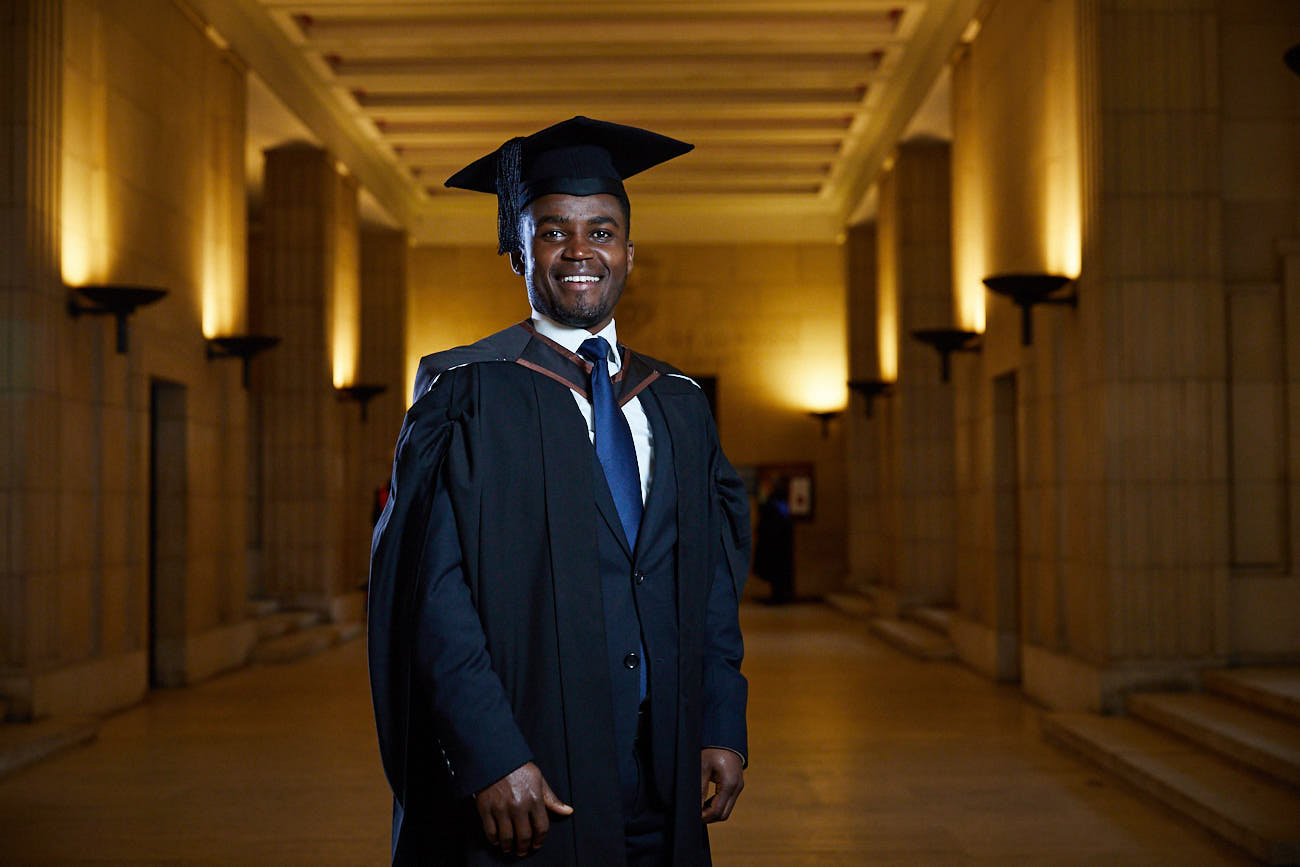
Born into a poor family in rural Tanzania, Godlisten was limited by the lack of resources available to students who were not able to afford to pay for their education. At the end of the school day and at the weekend, Godlisten would help his parents with farming their land.

Despite these challenges, Godlisten passed primary and secondary school. However, when it came time to progress to A-Levels his family could not afford to pay for his education. He went out and supported himself financially so he could complete his studies, while also supporting his younger brother at school.  Unfortunately, Godlisten did not get the grades needed to get a place at a university in Tanzania, but he never gave up hope of getting a university education.

Ten years later, Godlisten was living and working in the UK with ambitions to study politics. He said; “I became interested in politics from an early age, as growing up in Tanzania, I wanted to learn more about how decisions were made both at global and national levels.”

Even though Godlisten’s grades would have disqualified him from some university courses, Birkbeck’s inclusive policy meant that his application was assessed on future potential, not just past attainment. He commented: “I think it is very important for universities to recognise the potential in students rather than just looking at grades as many people don’t get the same opportunities as others educationally and so don’t achieve the right grades to progress. Birkbeck’s policy of not requiring specific grades and instead assessing my ability through set assignments meant I had the chance of getting a degree, something which I never thought I would achieve.”

When he first started at Birkbeck it had been ten years since he had written his last essay so his first assignment was a challenge. He recalled: “I was not used to reading long articles and books as I am quite slow at reading and it took me a while to get used to it. Learning how to structure an essay and develop an argument, when you come from an education system that just teaches you to listen and repeat information rather than think creatively was definitely a challenge!”

Godlisten found support from his lecturers and tutors who were able to help students from non-conventional educational backgrounds and was aided by the flexibility afforded to students through evening teaching, which he said allowed him to “plan my time well ahead of each term in order to ensure I attended all my lectures and complete my assignments on time.”

For Godlisten, taking the step into higher education was a worthwhile one that will hopefully see him fulfil his ambition of influencing political change in Tanzania. His parting words of advice for anyone unsure about returning to education: “If you’re thinking about getting a degree I would wholeheartedly recommend it. It may seem like just another three years of reading long books but I gained so much more than just writing essays and achieving good grades. I got to meet people I would never otherwise have met, increase my confidence and broaden my thinking.”

Further information
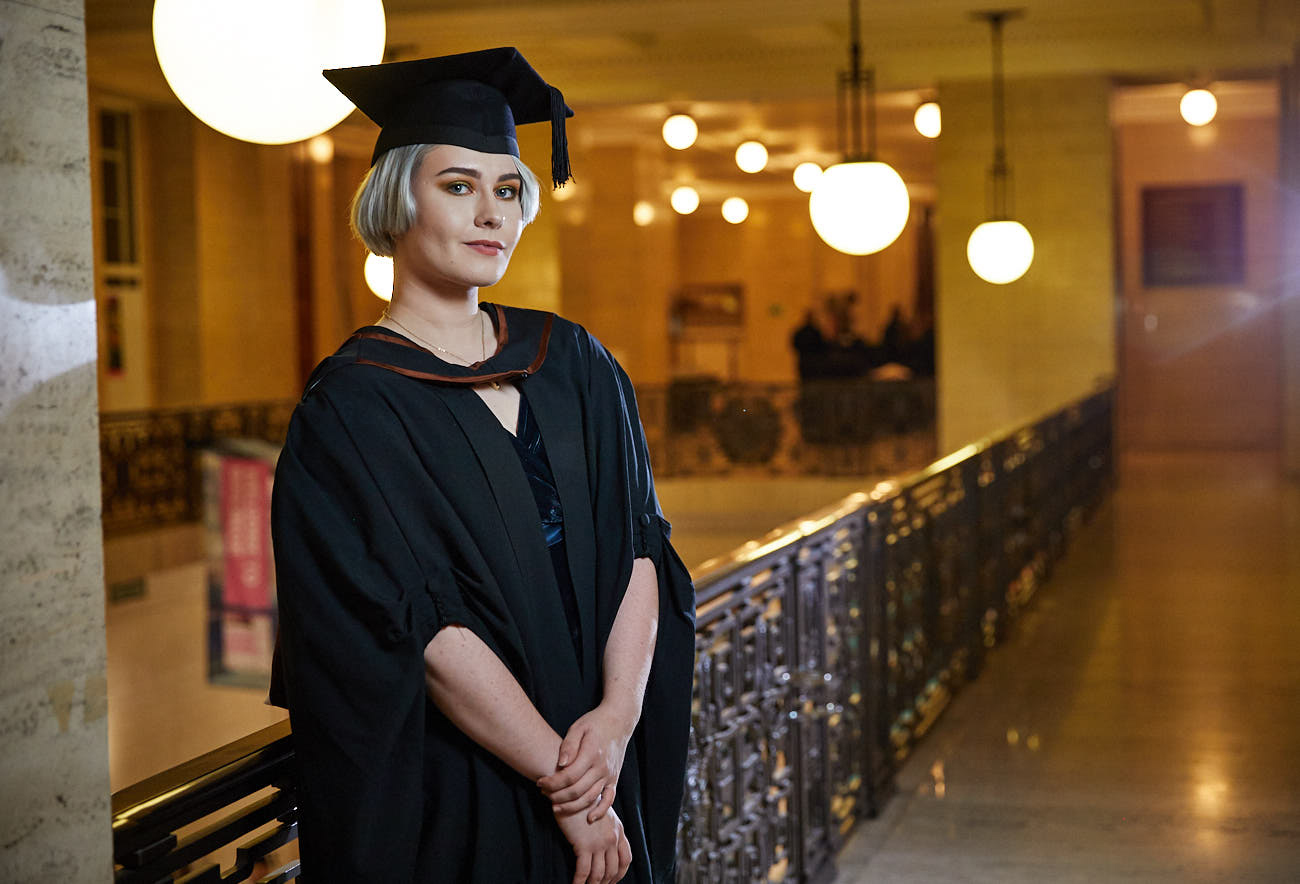
 

Turning a hatred of education into a passion

In their early life Phoebe Ewles-Bergeron associated education with self-loathing and suffering, but after a challenging journey they were able to develop their love for studying history at Birkbeck.

I always hated school. Education was not joyful or positive in my opinion. It was confusing, frustrating and seemingly endless – but I’ve always loved history. When I was four years old my mother found me in the sitting room trying to “excavate” the carpet after watching one too many episodes of Time Team. I was intelligent and curious about the world around me but in a system that labelled me as an underachiever. When I was six I was formally diagnosed with dyslexia and dyscalculia. Nothing at school seemed to work and soon I believed that my bad grades represented me. I got only Ds so I must be stupid. I could not wait for it to end.

As if that was not enough as a teenager my health started to fail. I was extremely fatigued, experiencing blackouts and had extreme, immobilising chronic pain. No doctor could give a diagnosis. What we now know as Postural Orthostatic Tachycardia Syndrome (PoTs) made my life worse by the day and the previously bad grades worsened. Frustration led to depression and anxiety. But luckily my love of history remained a constant.

When I considered the possibility of university Birkbeck appealed immediately. My PoTs systems are less prominent in the evening so attending classes would be much more realistic at that time of the day. Plus the College heavily promoted diversity. I saw testimonials from people like myself who were finally achieving with the help from teachers and administrators who supported and accepted them.

The only issue was that my A-level grades would most likely not be high enough to make me eligible for a degree. On paper I was far from a hopeful prospect – what saved me was the interview. I was able to explain my circumstances and talk about what I loved about history and archaeology. I was allowed to be myself and I walked out of Birkbeck with an unconditional offer. They saw past my bad grades from school but recognised that I was a young individual who loved knowledge and wanted to learn.

Birkbeck was efficient at getting me the help I needed through the Disabled Student Allowance. Teachers knew about my conditions and often offered me extra help when needed. In 2017 my physical and mental health declined and I had to request a leave of absence, the support and understanding that every member of the department had for me was truly exceptional.

I left for a year and a half, worked on improving my PoTS condition, worked on my cosplay hobby, and had surgery. But I was apprehensive about returning to Birkbeck.

You see, I am transgender. Non-binary to be precise. It was life-changing: depression gone, anxiety gone, and confidence up. My life was full of colour and potential. I was happy. But what would be the reaction of staff that I had come to respect? I should never have doubted it. The reaction was kindness. I still have my old gender marker on the official documentation as I’m still afraid of discrimination. But every member of staff I have talked to has been understanding; I was genuinely surprised. What surprised me, even more, was that my grades shot up. I went from an average of a 2:2 to receiving firsts. I truly believe that this change would not have been possible without the understanding and support of the university.

The best part of my experience at Birkbeck is that it has allowed me to flourish academically. As I studied History and Archaeology the course structure let me pick the topics that intrigued me the most. I got to learn both historical and archaeological approaches. I went on digs at the famous Must Farm and later Despotiko in the Cyclades. I finally decided that my interests lay in the ancient Greek and Roman worlds and I finished my four years at Birkbeck with a dissertation on that very subject. Education was no longer an annoying fact of life. It was addictive.

When I began my first year I still loathed education; I still associated it with suffering and self-hate. I am now in my first year of the MA in Classical Civilization and the complete opposite is true. I am confident in my abilities and intellect. Instead of fearing teachers who called me lazy, I now have teachers that encourage me to pursue further study. I have a disability plan that allows me to play to my strengths. I will never be able to thank Birkbeck enough for managing to transform a decade’s worth of hatred for learning into a passion, one that I hope will continue for many years to come.

I recognise that I am an odd individual; transgender, multiple disabilities and learning conditions. But I have found a place to be accepted at Birkbeck, to be understood. And I hope that any prospective or new student reading this, who is like me, who has struggled for years in a system that was not made for people like us, will consider Birkbeck as a gateway to great things.

Further information:


Me, Human: ‘The Big Discussion’

Dr Gillian Forrester presented ‘Me, Human: The Big Discussion’ at London’s Science Museum, where an expert panel reflected on questions of developmental psychology.

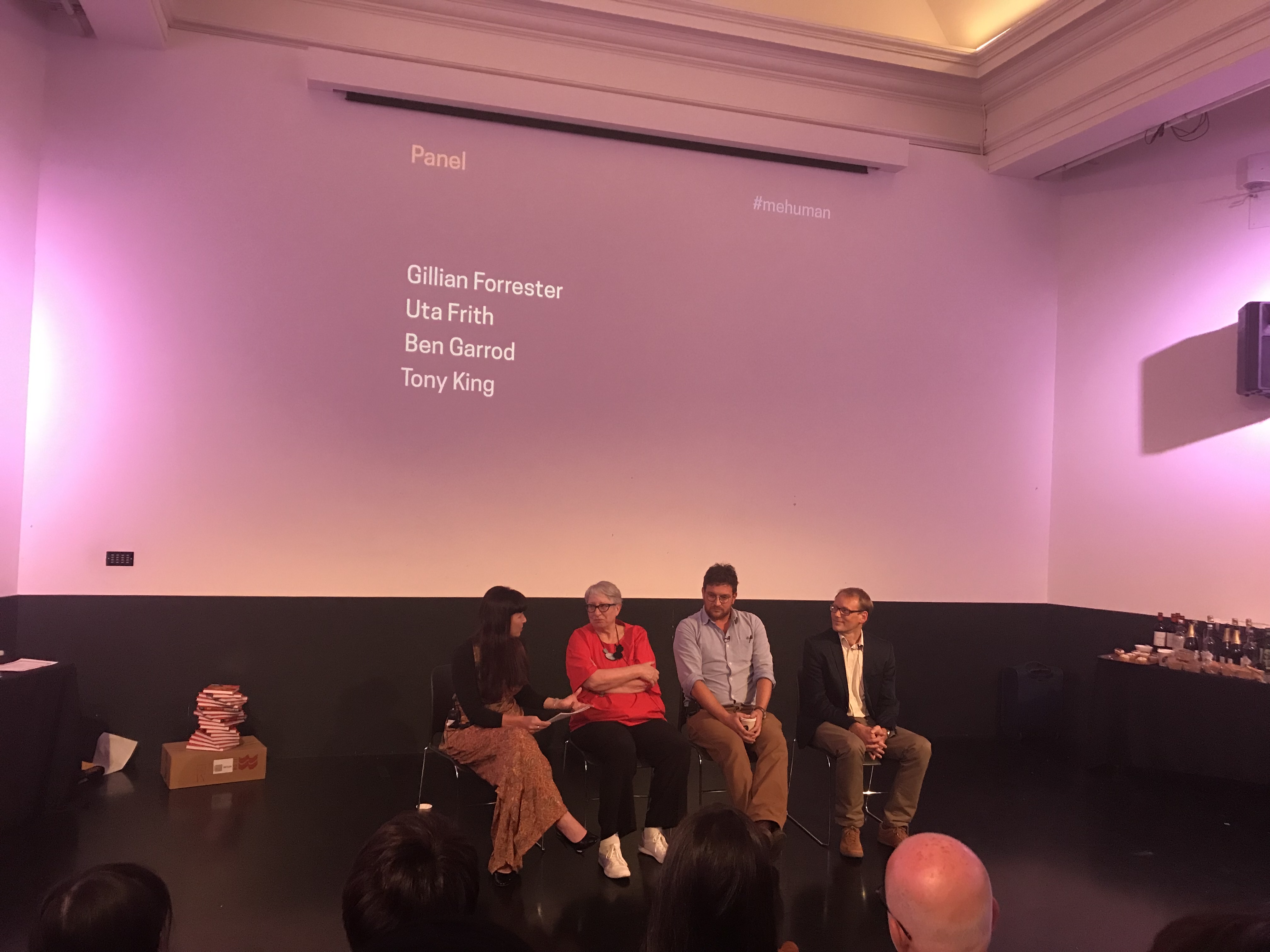
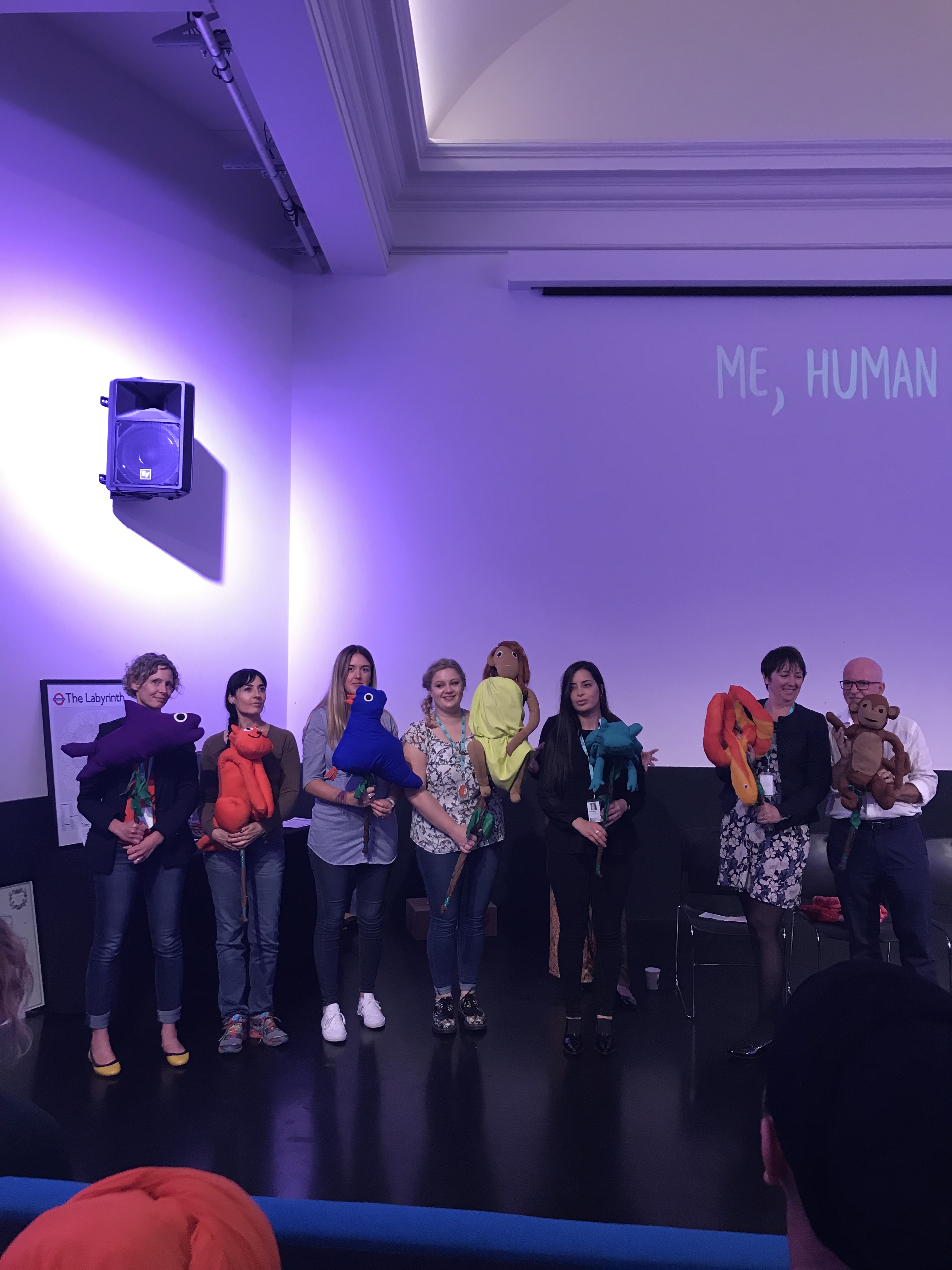
The event was held in the Hans Rousing Lecture Theatre and began with an introduction to the Me, Human project, a set of live experiments currently being held at Live Science at the museum. Dr Forrester demonstrated evolution through a set of handmade puppets that are on display in the Me, Human gallery and then went on to introduce her esteemed panel which included Professor Uta Frith, a developmental psychologist, Professor Ben Garrod, an evolutionary biologist, primatologist and broadcaster, and Tony King, an independent researcher with the Aspinall Foundation.


In her introduction, Dr Forrester noted both the number and the diversity and of attendees, the Science Museum had welcomed over the course of the project, which will yield a rich source of data to be released in the coming months. The Me, Human experiments include a number of stations which investigate how different sides of our brains are involved in various functions in our day-to-day lives. Earlier that day attendees of the discussion were invited to attend the Me, Human gallery and take part in these experiments in order to understand whether they are dominant in their left or right brain.

The Me, Human team and evolution puppets

The conversation was informal with comments and questions welcomed throughout the discussion. Dr Forrester started the discussion with a question on developmental psychology, which was followed up with a question from a member of the audience who asked simply, “What’s next for us in terms of evolution?” – something the panel said was hard to predict! The panel highlighted the importance of experiments like the Me, Human project and the need for human and animal behavioural psychology to be researched in tandem as Professor Garrod exclaimed: “We are animals!”  Other questions posed to the panel included; what’s next for humans? How does social media impact our need to be social in a time where we are increasingly connecting to others through technology?

Later in the panel, Dr Forrester questioned Professor Frith on her theory of ‘slow science’ – her belief that academics should only publish once a year to ensure a quality over quantity approach to research in order to sustain the practice.

It is clear that the Me, Human project has garnered invaluable results and it was positive to see a mix of academics and the general public in the audience. During the conversation, Professor Garrod asked how many of the audience are researchers and not, and highlighted the need for the non-researchers in the continuation of the field of psychology.

The Me, Human project be at the Science Museum London until 30 September 2019.


Birkbeck in Venice for Study Trip 2019

Three students from the Department of History of Art reflect on their recent trip to Italy where they explored the architecture of various cities.

Around 30 Birkbeck students – postgraduate and undergraduate – congregated in Venice in April 2019 for the annual week-long study trip, led by the indefatigable and super knowledgeable Dr Sarah Ferrari and Dr Zuleika Murat from Padua (Padova) University.  Three of the group, Sue Joshua, Angela Parry, and Steve Cragg, share some of their memories and experiences….

Angela, an MA Museum and Cultures student:

If you think you know a city – think again!  These study-tours are not just about ticking off the top ten tourist attractions, but exploring off the beaten track, and taking time to really look at stuff!  We arrived on a slightly damp and chilly day, successfully negotiated the Vaporetto and found our hotel in Arsenale – a great location with lots of friendly local restaurants and cafés.  Then it was full-on. Taking in the unique beauty of Venice, walking, chatting with everyone and catching up with people from the 2018 Berlin trip (it’s easy to get hooked and keep coming back on these tours!).  My favourite off-tour location was the Greenhouse café at Sera dei Giardini in Castello, built in 1894 to create a “tepidarium made of glass and iron” and now a great place to just relax with coffee and a good book.  Top Tips; get the Blue Guide is great for extra information, comfortable shoes and an umbrella are essential, rest your eyes with some contrasting art. Sue, Steve and I took an hour out for a welcome blast at the Guggenheim Collection – and then it was back to those amazing frescoes!

Sue, an MA History of Art student:

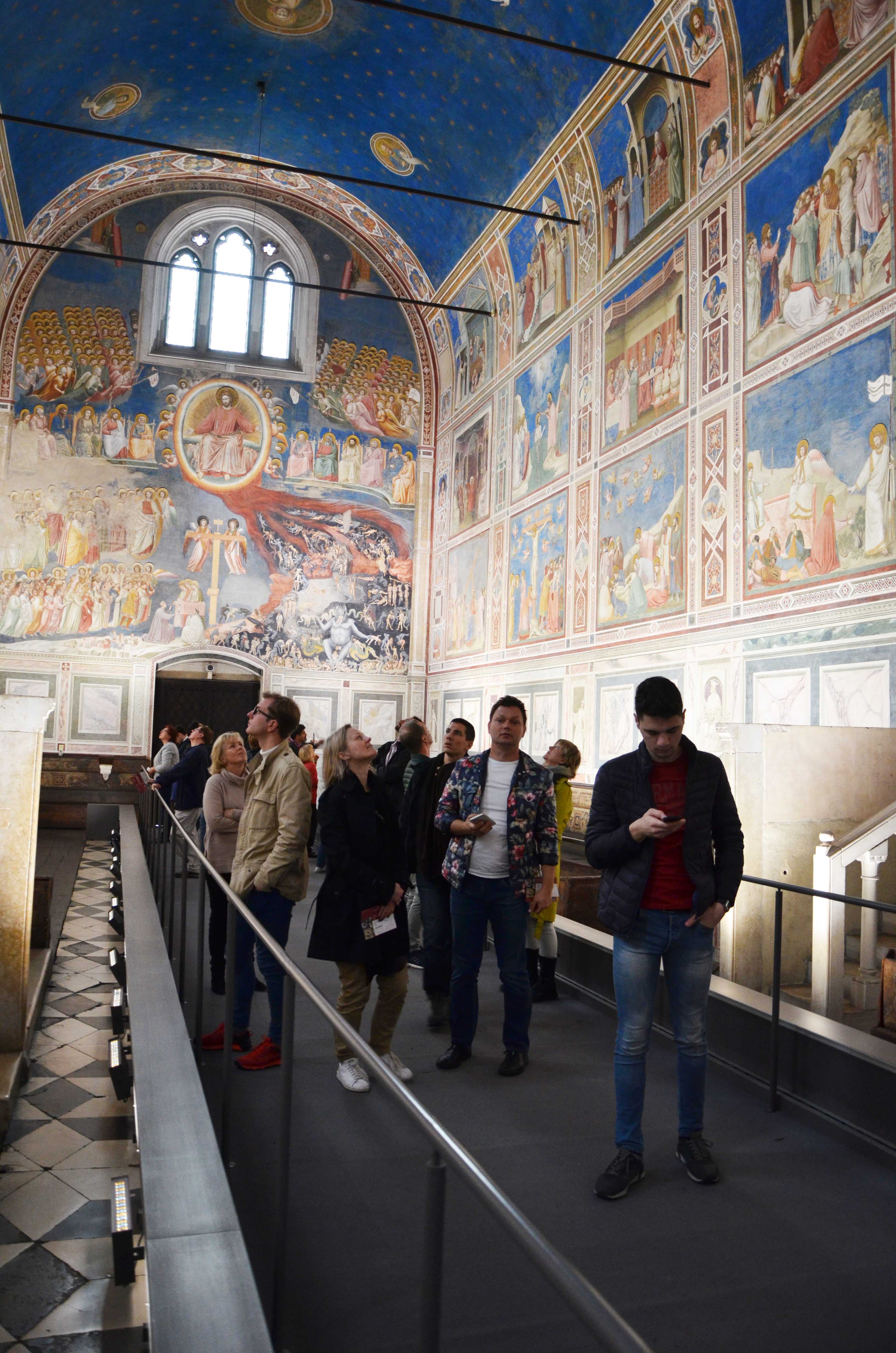
Speaking of frescoes…. Mid-week we visited Padua, about half an hour from Venice by train but a world away in terms of architecture, open space and general tempo. The city is renowned for its fourteenth-century fresco cycles, many of them well preserved and easily accessible. Some of these testify to the ability of powerful and wealthy individuals to possess and transform prestigious urban spaces. Enrico Scrovegi was a wealthy merchant from a family with a dubious history of moneylending or usury. On land originally used as a Roman arena, he built a palace with its own private oratory, known as the Scrovegni (or Arena) Chapel. Visitors must sit in an air-conditioned waiting room for 15 minutes to allow their body humidity to cool. Time in the Chapel itself is limited to 15 minutes for a maximum of 25 people. Every surface of the walls and the barrel-vaulted ceiling is painted. There is a sense of being sheltered under a blue sky, pierced by stars, the colour an extraordinarily bright and deep ‘Giotto blue’. Nothing had prepared me for the visual and conceptual world created by Giotto in 1305. The central themes are the life of the Virgin and the life and ministry of Jesus, beginning with the story of Mary’s miraculous birth to her elderly parents Joachim and Anne. The narrative is presented chronologically, starting from the top tier and working around the Chapel and down in a kind of spiral, each scene pointing to what will follow. There are closed buildings and open spaces, contrasts of light and shade, bright and beautiful colours and above all humanity, wit and recognisable emotion in Giotto’s depiction of his characters.


Steve, a BA History of Art student:

San Zaccaria Altarpiece by Giovanni Bellini

Back in Venice, I’m concentrating on one work that stays with me from the trip.  We gathered in the rain early one morning in an eerily quiet square a stone’s throw from St Mark’s, and in front of the Convent and Church of San Zaccaria. Containing many stunning works, the five-metre high altarpiece (also known as Madonna enthroned with Child and Saints) by Giovanni Bellini from 1505 stands out (and the photograph I took is still my screen-saver).

It is an outdoor view of the Virgin and infant Christ in a rich architectural setting.  The main figures are flanked by meditative saints; whose demeanour and posing encourage a similarly thoughtful attitude in the viewer (especially this one suffering a little from too much Valpolicella the previous evening).    St Peter on the left earnestly clutches his keys in contemplation, and on the right St Jerome is immersed in an enormous Bible.  The inner figures of St Catherine and St Lucy bend attentively towards the Virgin. A single angel plays a stringed instrument at the foot of the Virgin’s pedestal.  Spending time in front of this work provides the perfect retreat from tourist-besieged Venice.  Although fighting to get a glimpse of the golden mosaics in St Mark’s was worth it too.

Next year’s trip has not been announced yet.  But do think of going – travel and accommodation are up to students to arrange, but the study programme itself (after entry fees etc.) is totally free. The trip is made possible by the generous support of the Murray Bequest and was set up in honour of the department’s founder Professor Peter Murray. The Bequest also offers a number of bursaries every year to students who would otherwise be unable to attend. Details on how to apply are circulated to students when information on the trip is released – usually in December or January. You can read blog posts about past trips here.

Further information: